
$1,950.00
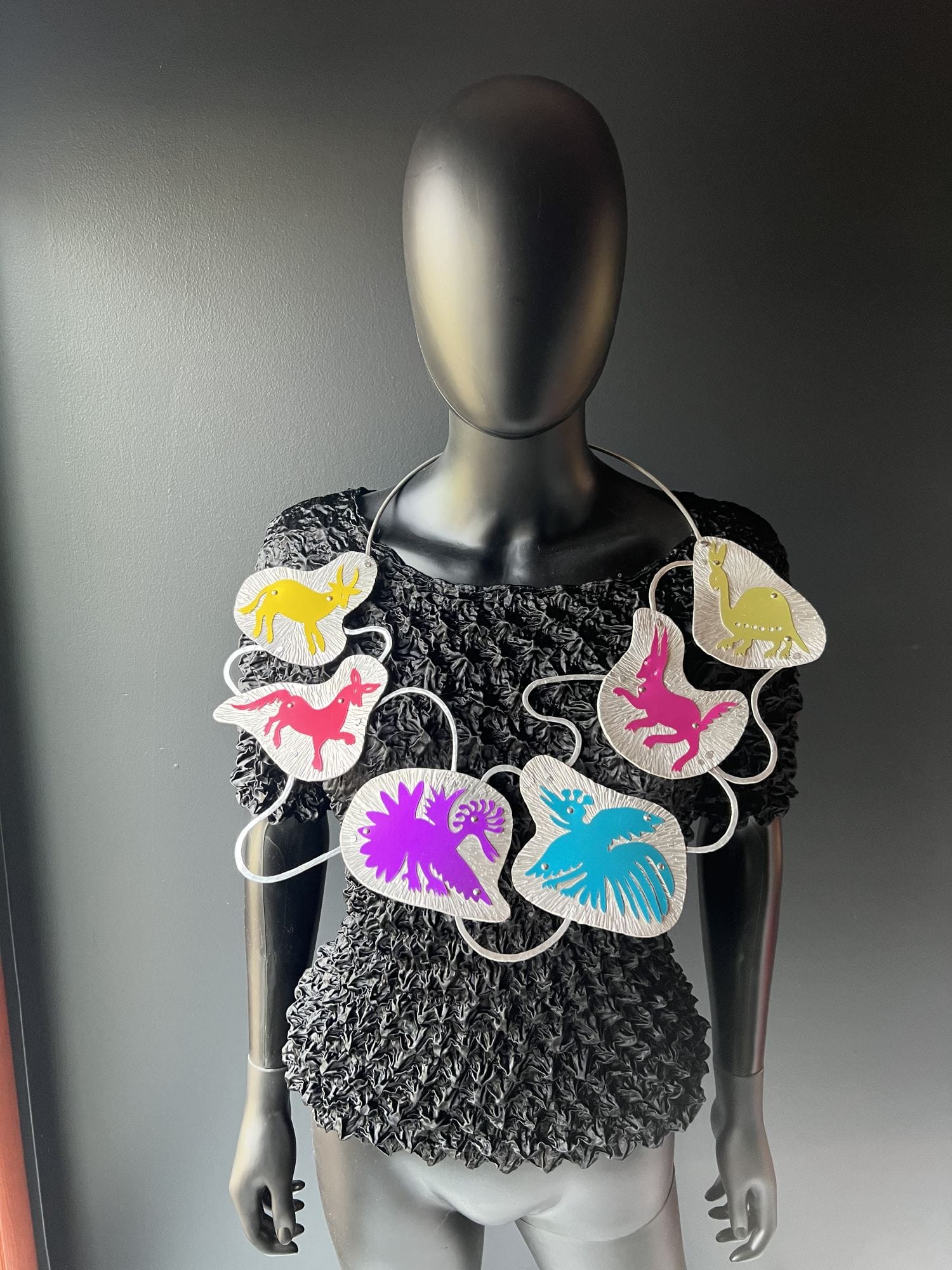
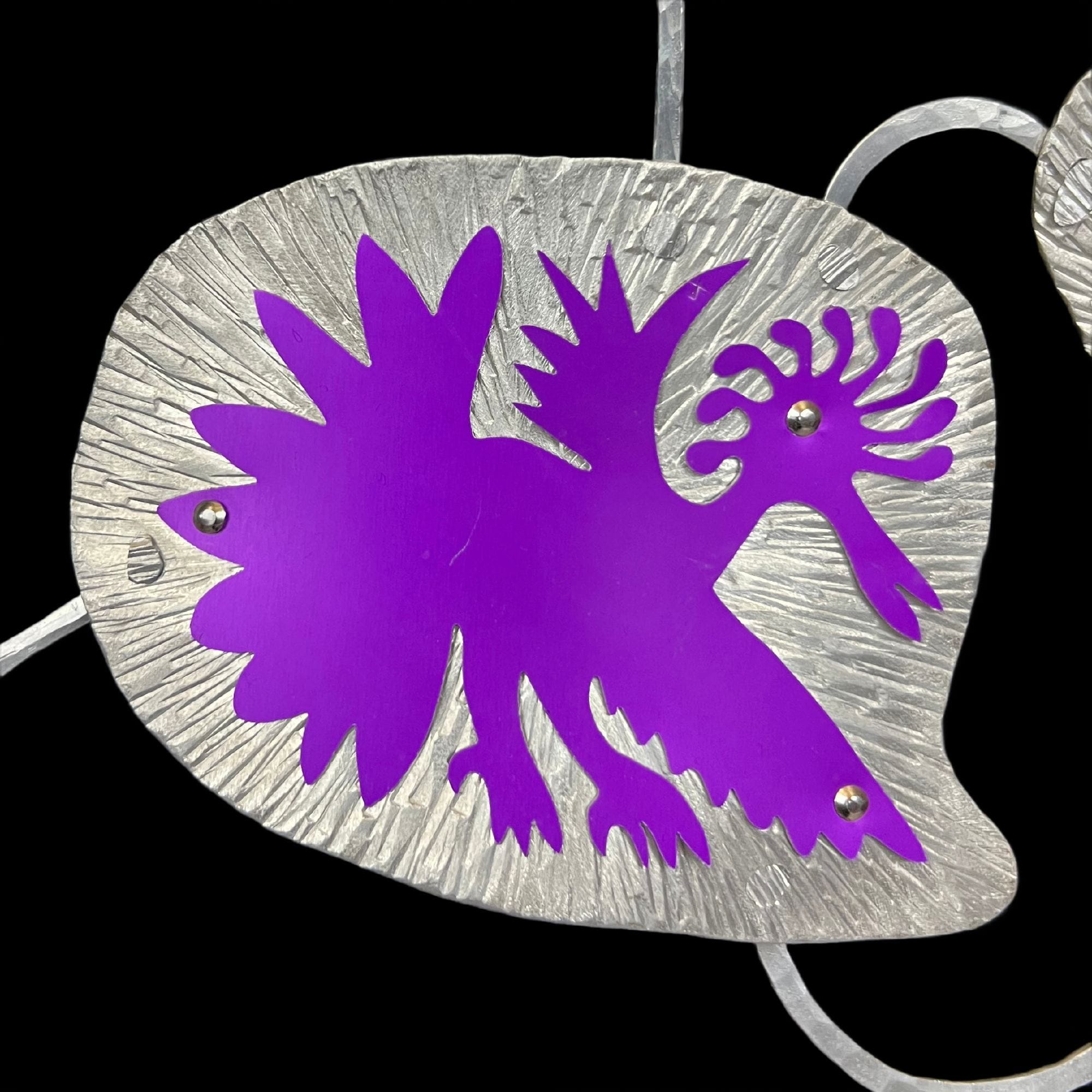
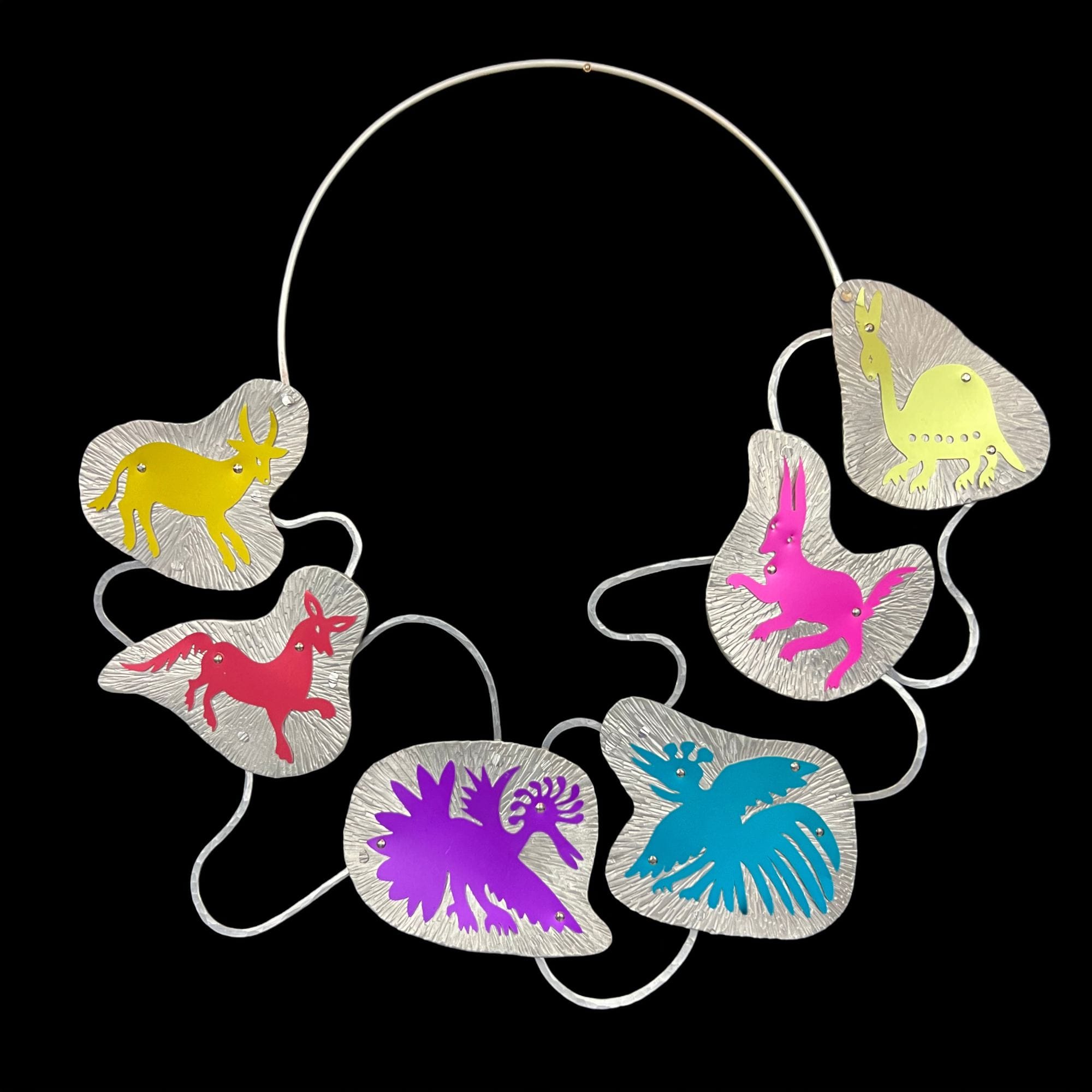
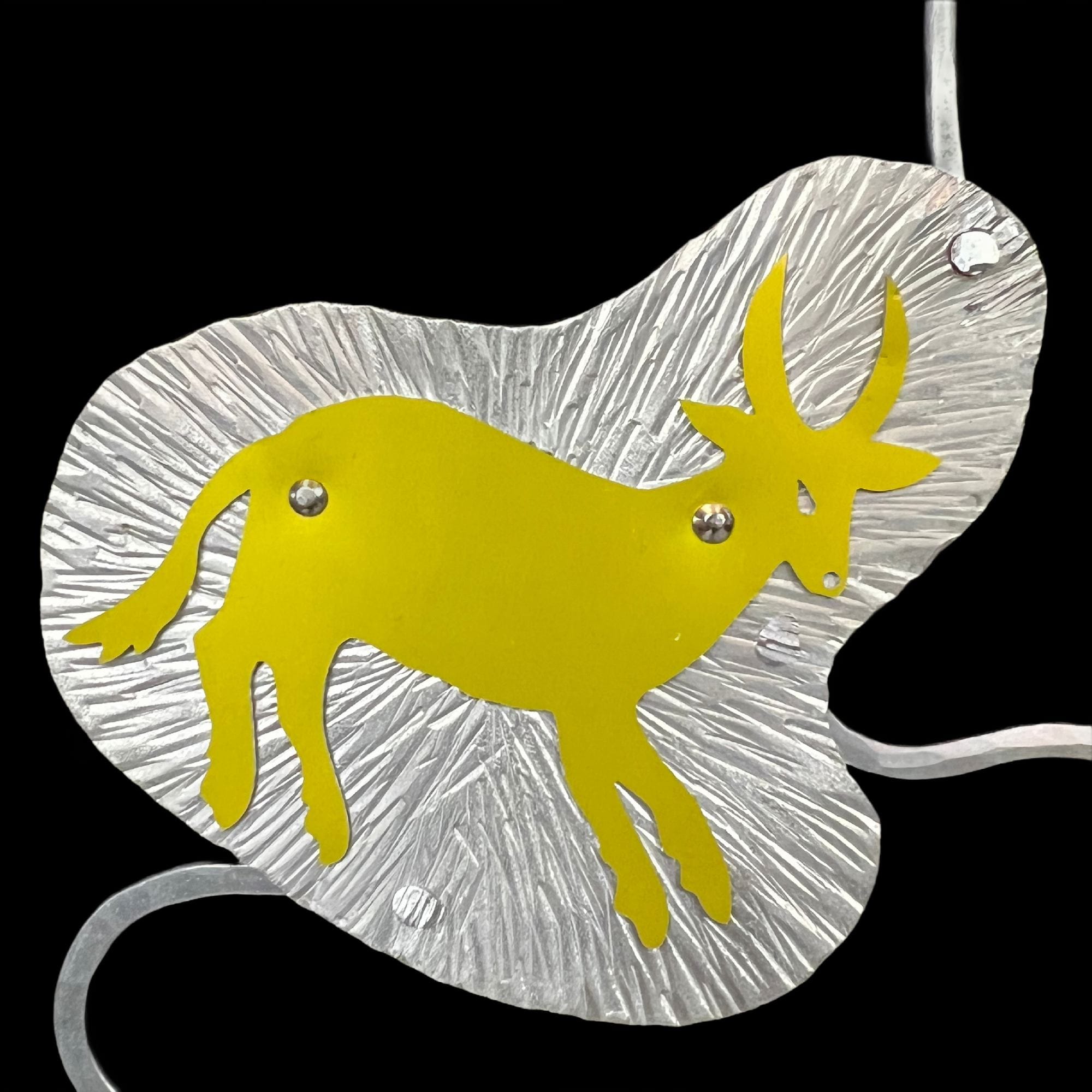
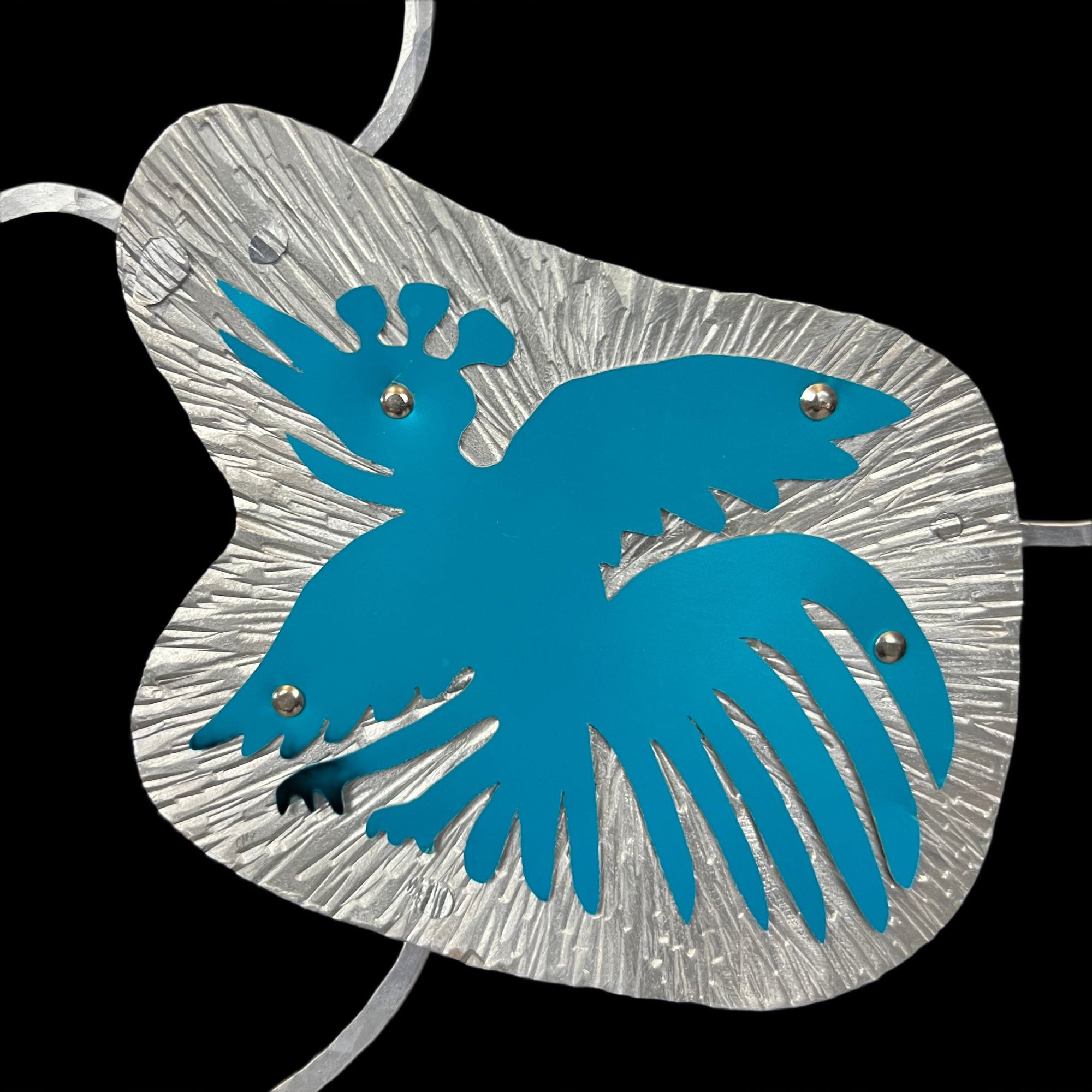
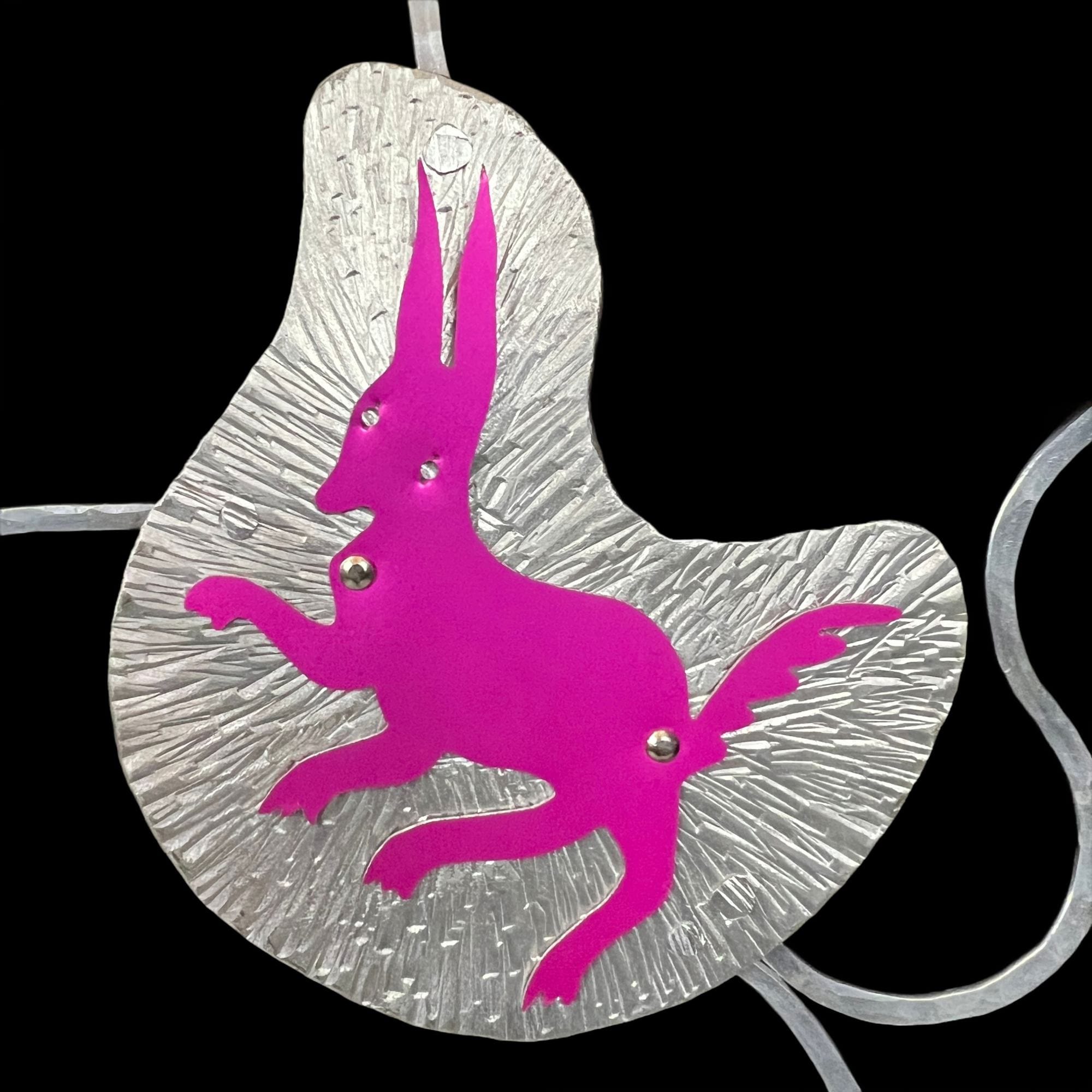
Animal Familiars, 2022
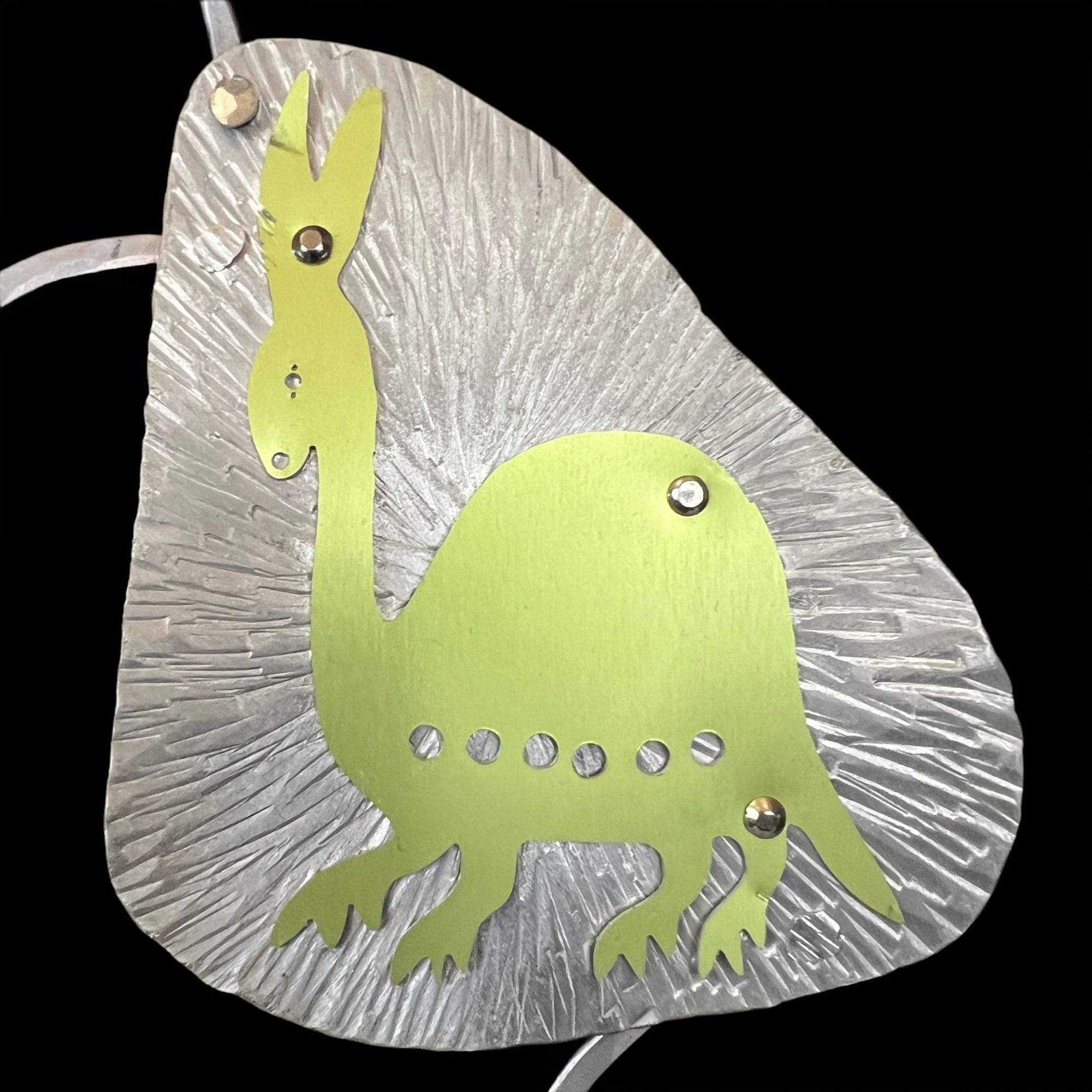
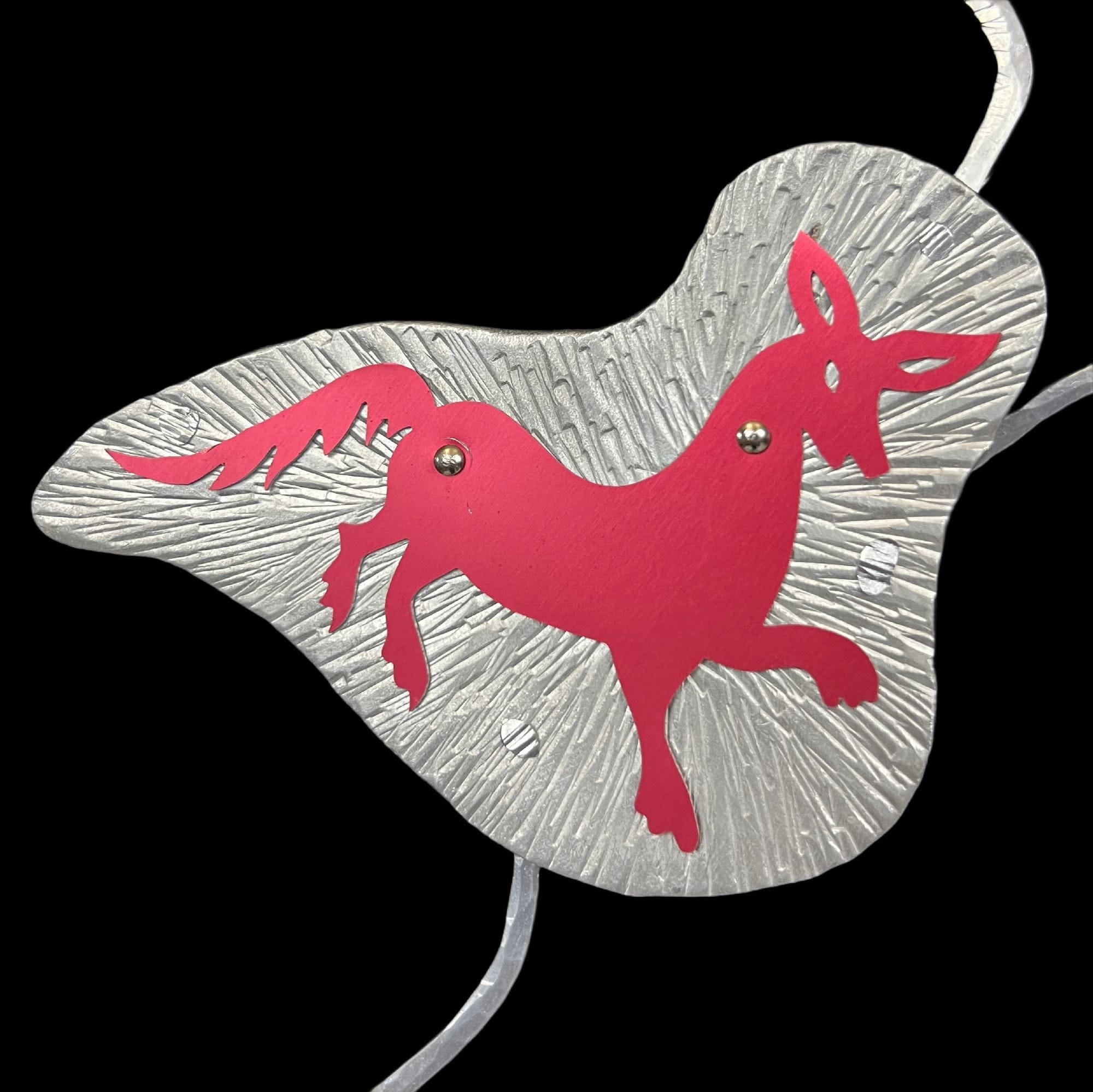
Cold Forged Aluminum, Anodized Aluminum, Aluminum Wire
Dimensions of Opening: 8.5″ H x 7.625″ W
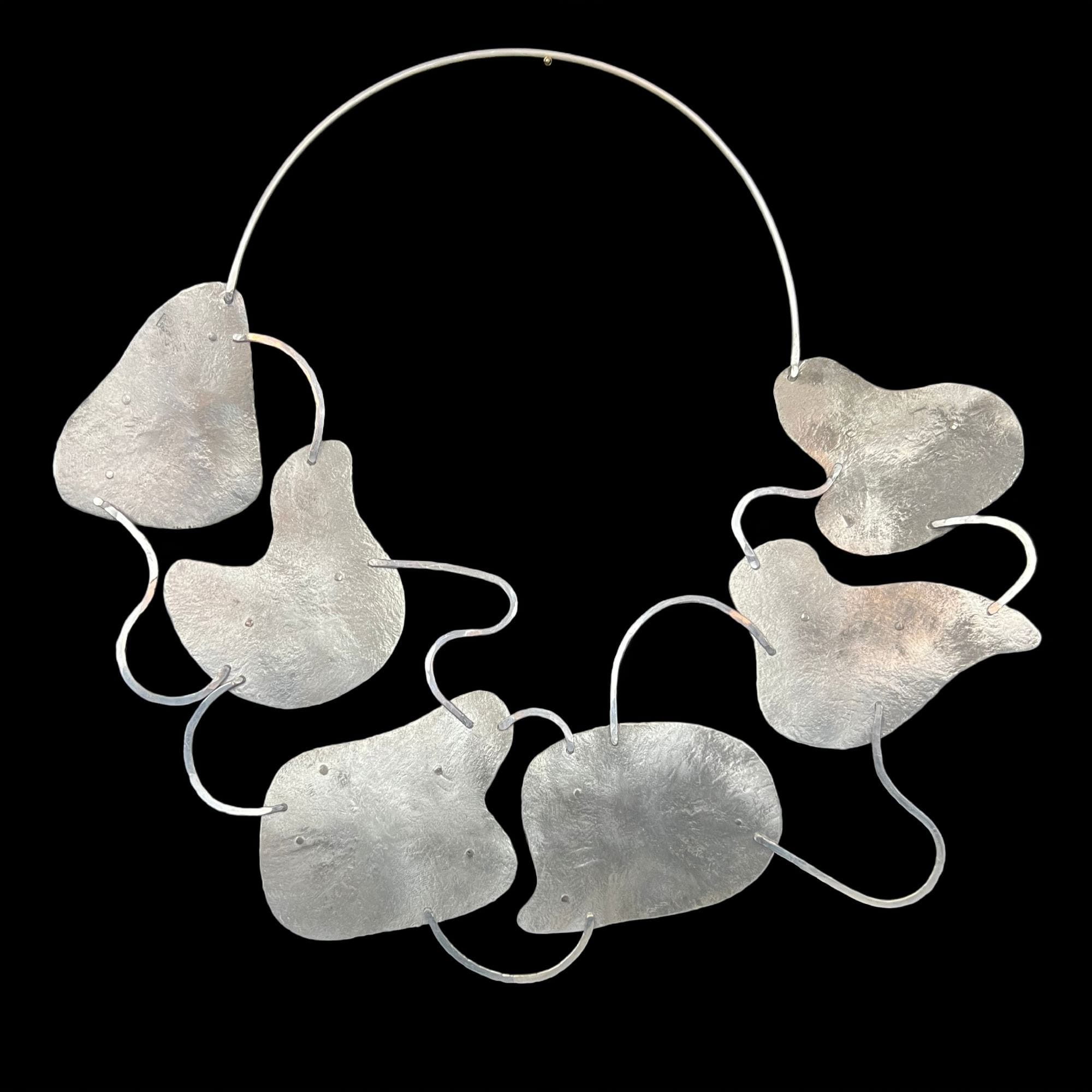
Dimensions of Necklace Overall: 15.75″ H x 16.5″ W x .75″ D
Stamped on back with artist’s mark.
1 in stock
Jewelry was the first visual art I practiced, beginning in 1990, as a way to make metal sculpture with limited space and tools.
When I transitioned to female, I decided to revisit jewelry making as an outgrowth of my obsession with fashion design. With new influences and inspirations informing my designs, I quickly fell in love all over again. You can see from the scale of my work that I still approach the art as a sculptor, making bold statement pieces.
The pieces in the Talismans of Maximal Confidence series owe a great debt to an idea Robert Farris Thompson alludes to in the essay Rhythmized Textiles in his book Flash of the Spirit. He compares the staggered patterns of Mande textiles and of crazy quilts from the American South to the “off-beat phasing of melodic accents in African and African American music.” That comparison changed everything about the way I think and work as an artist, becoming a foundational element early in my career.
In Western art, we typically consider something to be a pattern only when it repeats predictably, like a checkerboard or a picket fence. The idea of a visual pattern as improvisational, erratic and vibrant as a jazz solo seems an entirely different thing, an expression of chaos.
But pattern is structure and structure is not always symmetrical. All one need do is look at the world to see constant examples of non-repeating patterns which are nevertheless rhythmic, dynamic and constant: the patterns of rivers; of lighting; of veins and arteries or a tree’s roots and branches; the migratory paths of birds; the topology of a region (and it’s relation to the layout of cities or to the distribution of flora and fauna).
I have used this concept in everything from ironwork fences to collage to mosaic, but in this series it finally took me to a place I had been trying to reach for 30+ years. Maybe the key was estrogen. Maybe it was spending hours every day studying fashion design and textile prints. But probably the real key was figuring out that if you want to create Rhythmized, improvisational patterns you have to let go of control and improvise.
I went into the studio and cut hundreds of metal shapes based on the shapes used in Kuba cloth. I arranged them after cutting, letting the pieces speak to each other, finding the patterns as I went rather than trying to achieve a tightly controlled preordained image. Each new work was a surprise and revelation. New techniques of joining and hanging the pieces in space revealed themselves as I went, inspired by the dialogue of forms.
This series is made from improvisational shapes cut freehand from decommissioned street signs. Glass beads are fair trade sourced and are individually handmade from recycled glass in Ghana. Meteorite fragments are from the Campo del Cielo meteorite that fell to Earth over 4,000 years ago in Argentina. Bamboo coral is vintage stock.
The structure of joined pieces are inspired by the non-repeating patterns of Kuba cloth from the Democratic Republic of the Congo. The shapes I use are influenced by patterns in nature, Kuba cloth, Mid Century Modern fabric prints, and the work of Alexander Calder, Isamu Noguchi and Wifredo Lam.
After cutting, the aluminum is buffed with a wire wheel to remove the sign decal, adhesive, and any grime or slag from cutting, bringing the metal to a rich satin-like sheen. The edges of the shapes are further refined with a grinding wheel, belt sander and for tight details or holes, carbide grinding burrs.
Texture is applied by hand with a hammer— every single fine line of the texture is the result of an individual hammer blow. Even my smallest pieces typically require hundreds of swings of the hammer.
Pieces are joined with heavy wire from salvaged aluminum electrical cables which pierce the plate and are hammered into rivet heads. I developed this technique to control exactly where pieces hang in space in relation to each other (in a way that more flexible connections like chain, cord or links would not). I may be the first artist to use this technique… none of the jewelry experts I have consulted have seen it elsewhere.
Unlike precious metals, aluminum does not need to be polished. Pieces I applied this finish to over thirty years ago are as shiny as the day they were created.
What makes this finish truly special is the way it catches light and picks up colors from its environment. The hammer edge cuts very crisp grooves that shine much like a faceted stone. In blue light it can resemble mother of pearl, abalone or opal. In warmer tones it shimmers like amber, coral or agate.
Another advantage of Aluminum is its light weight. I can do large statement pieces which are comfortable to wear because they weight so little. The same work in silver or gold would send you straight to the chiropractor.
| Weight | .5 lbs |
|---|


