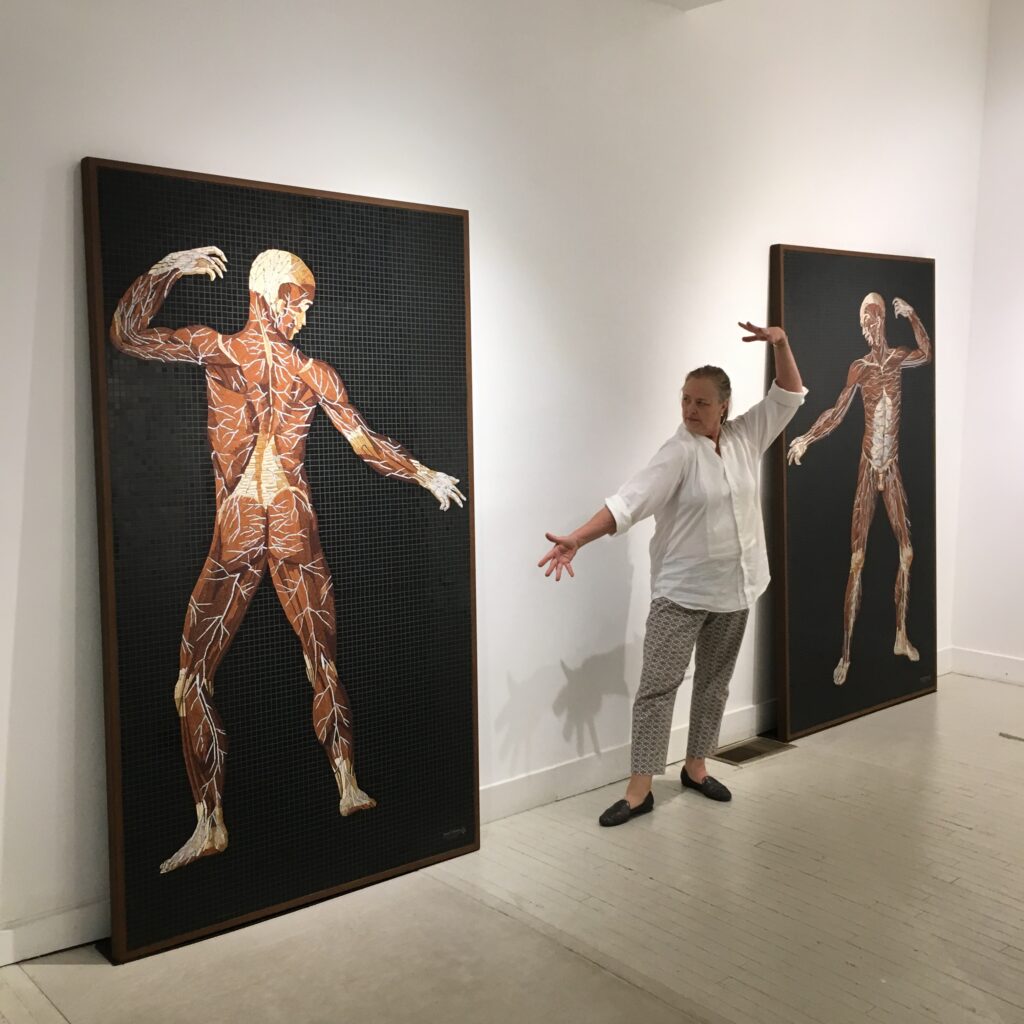
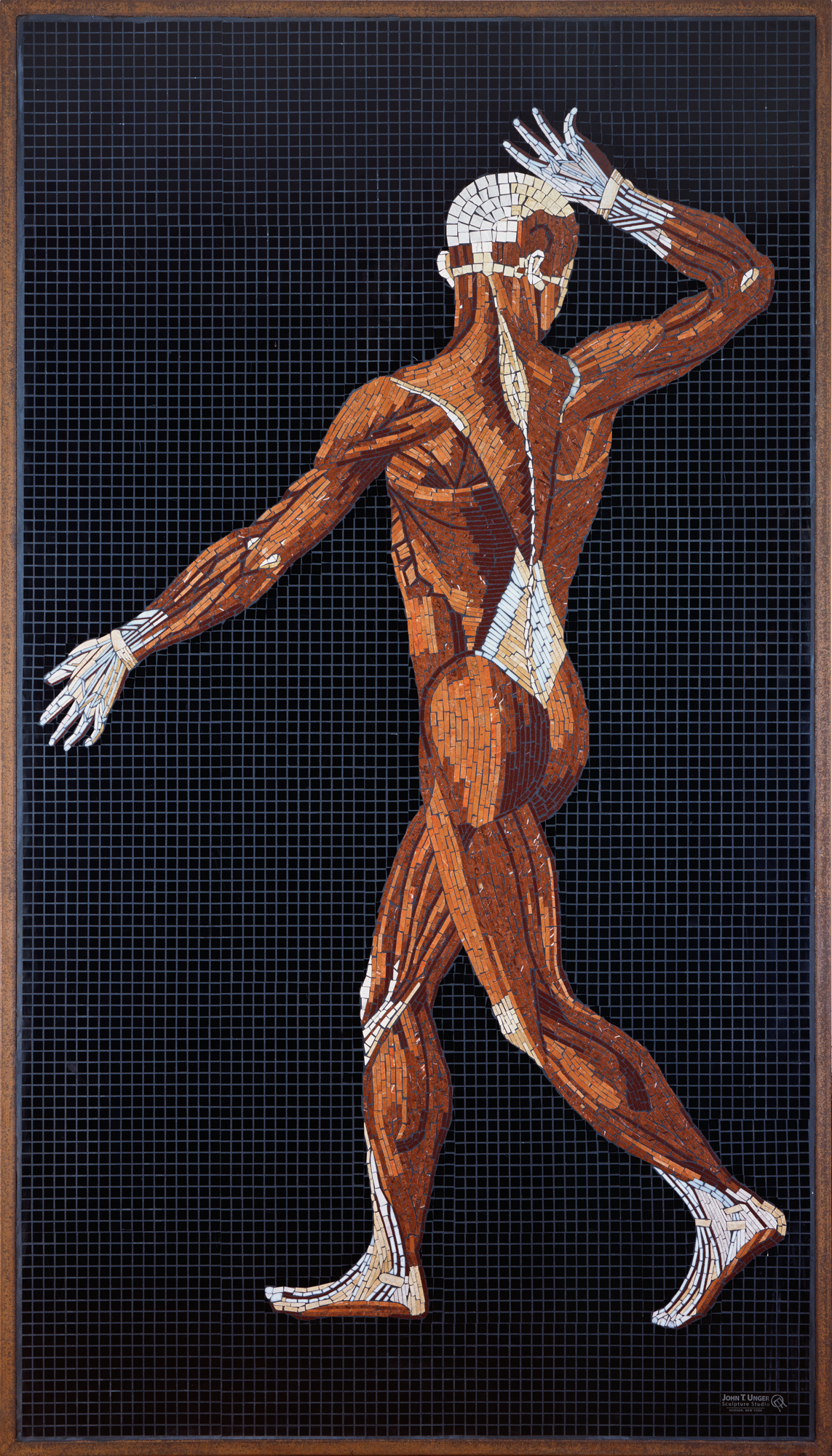
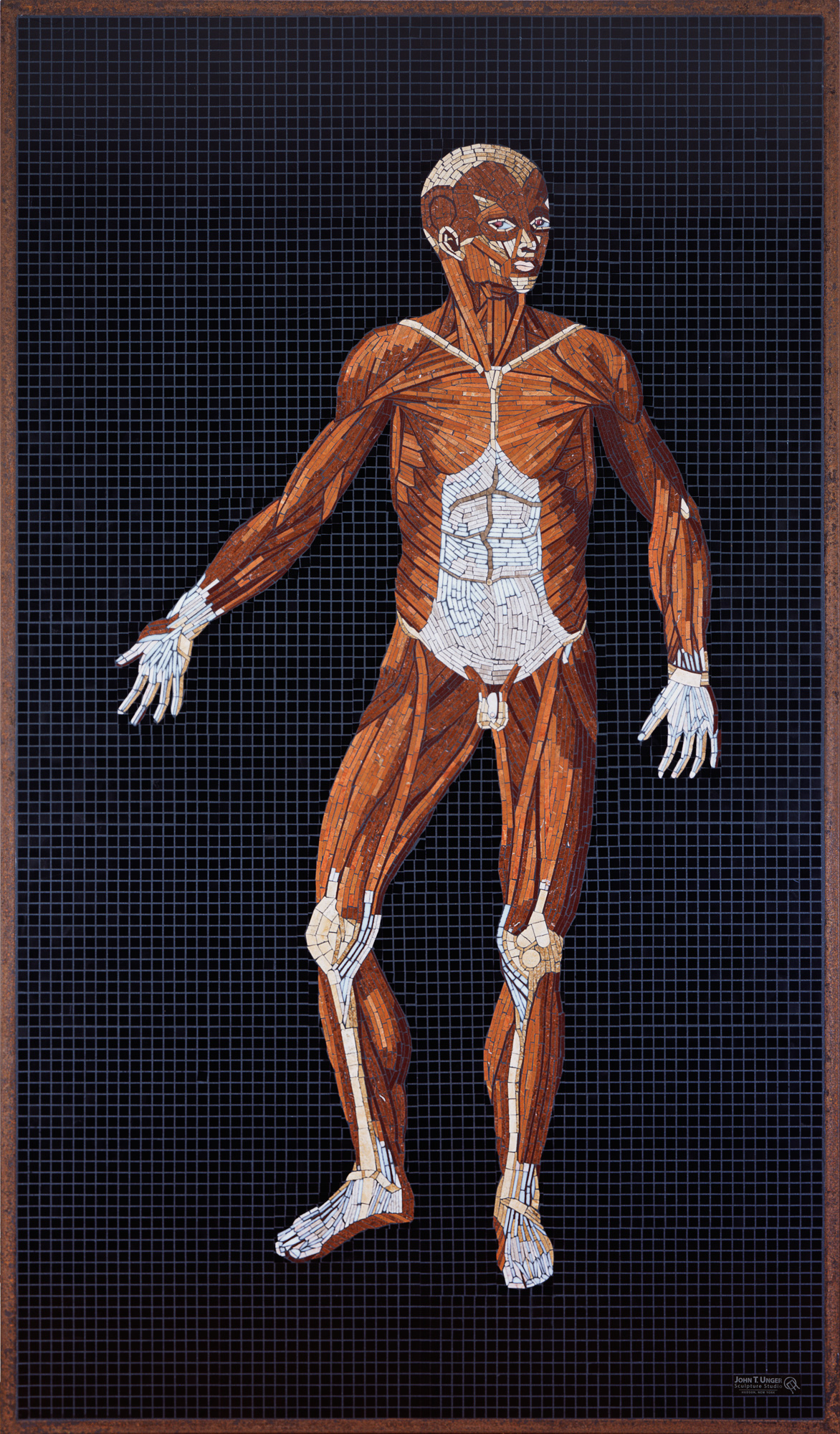
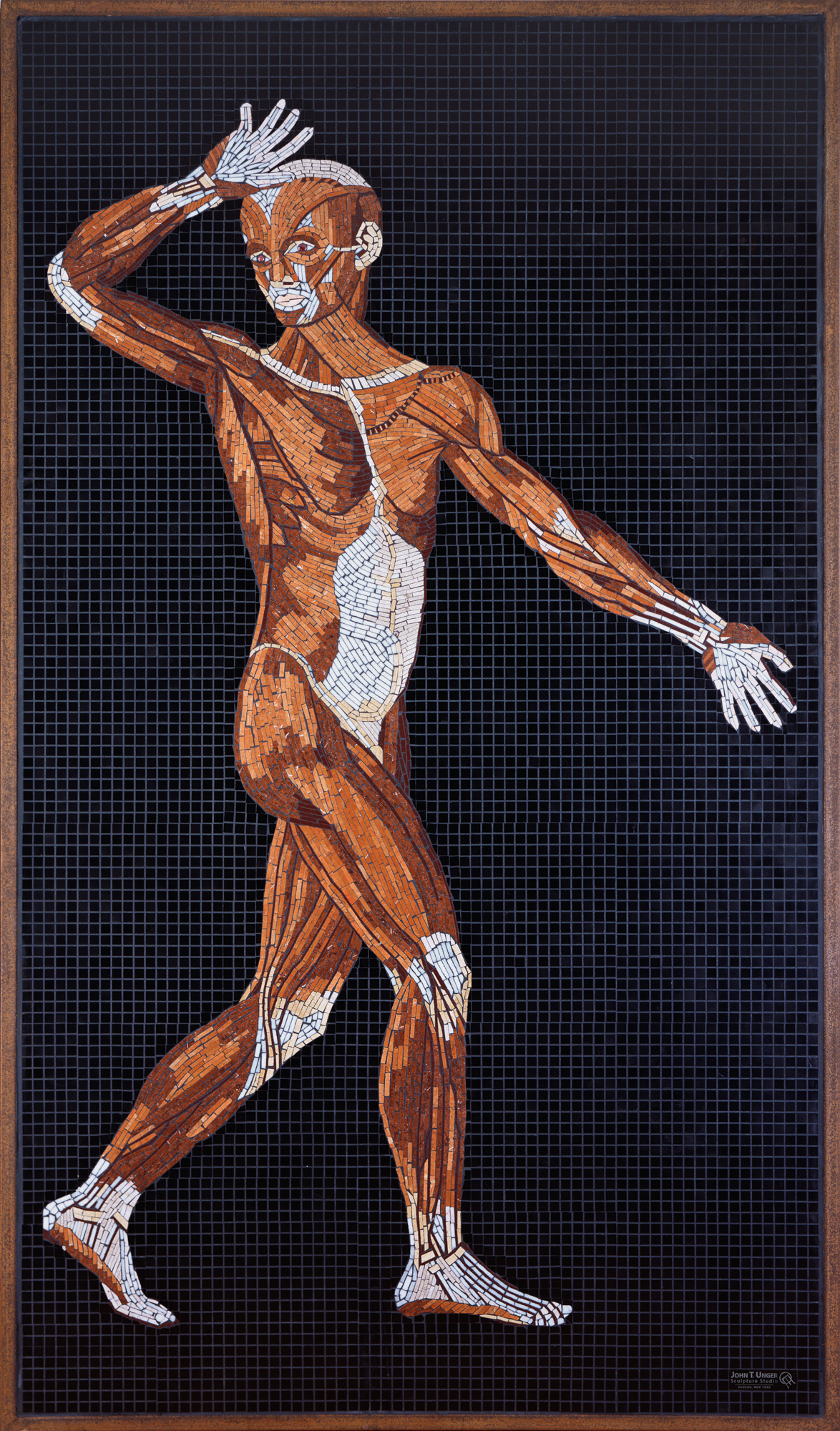
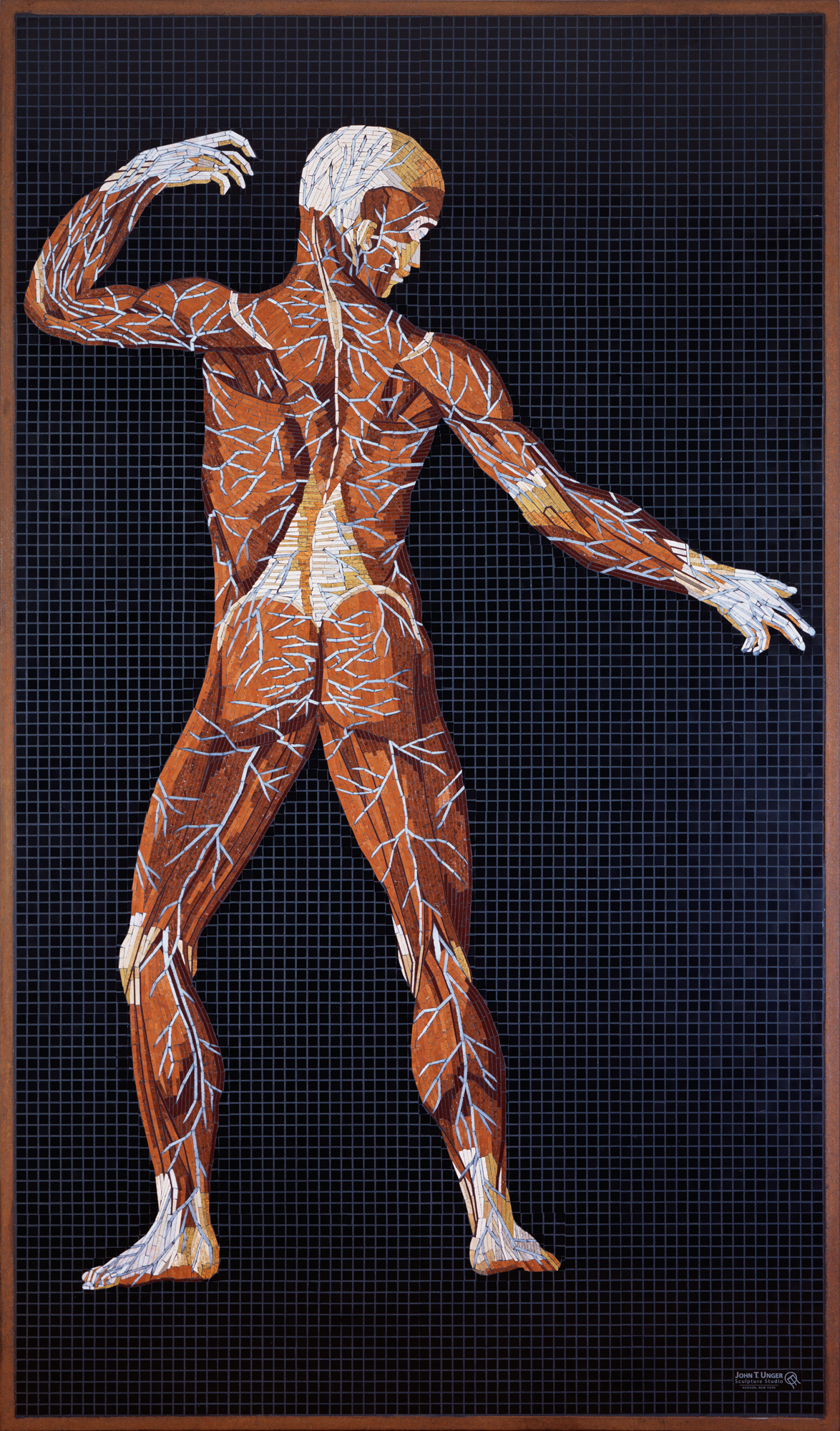
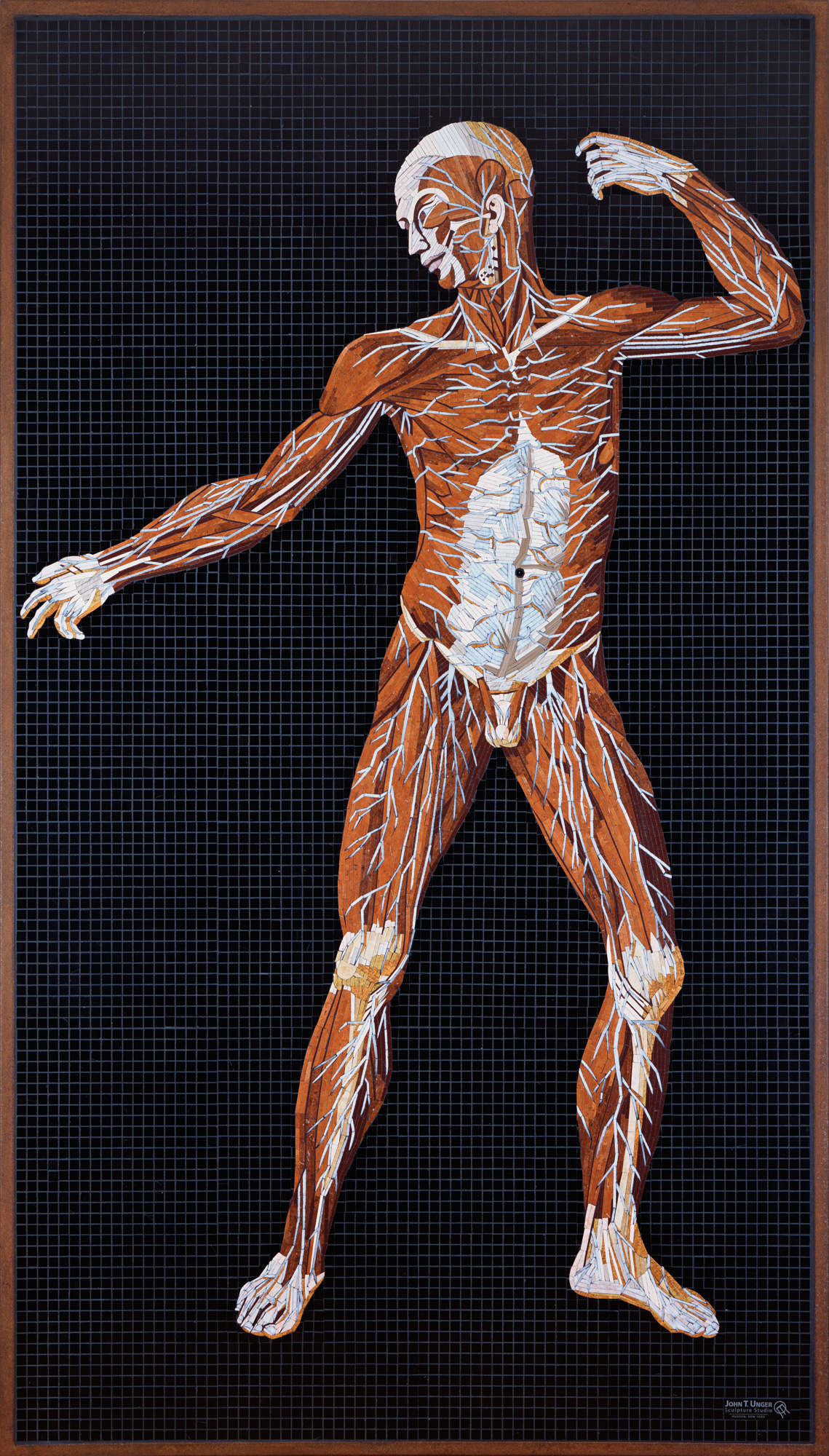
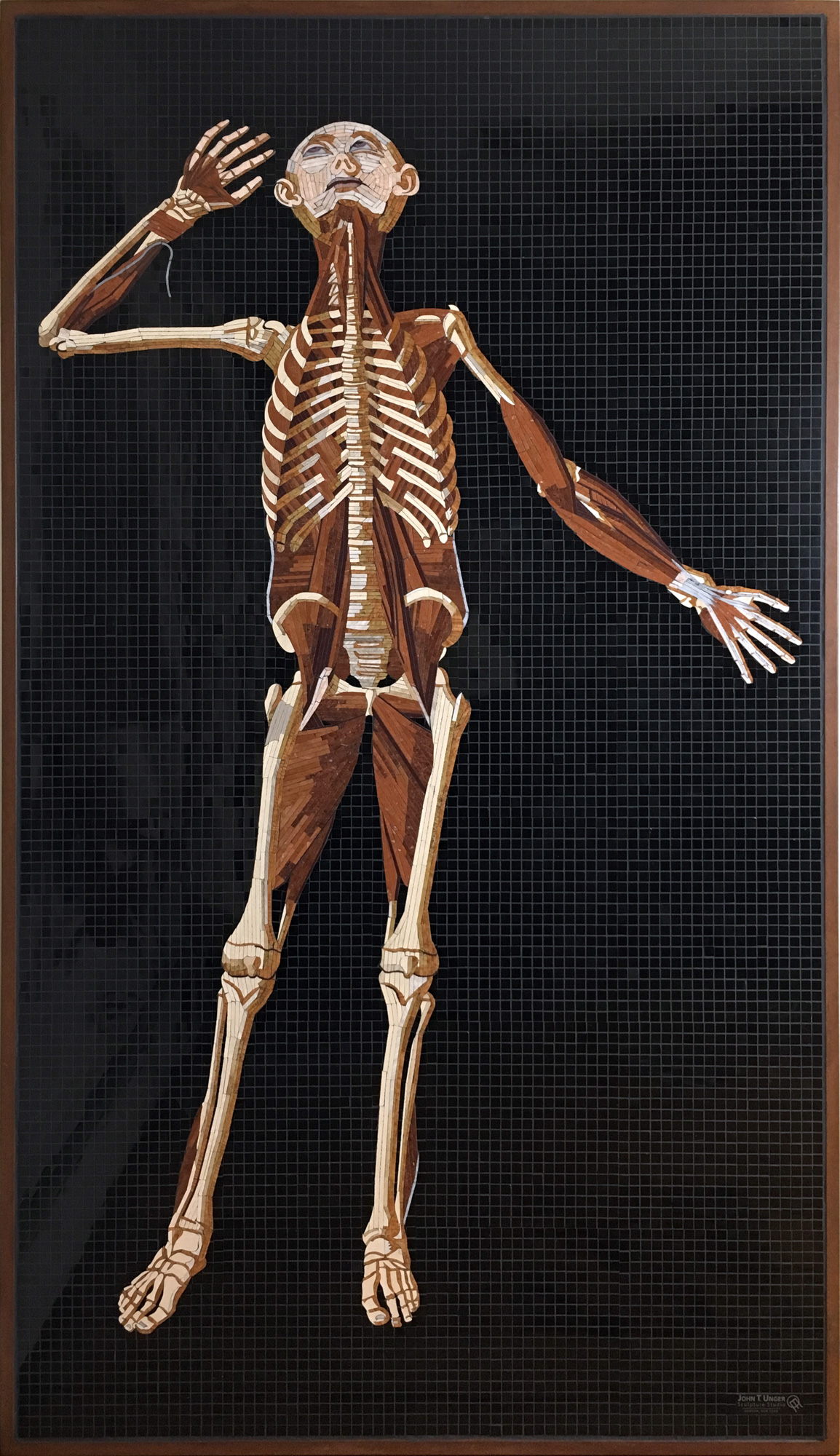
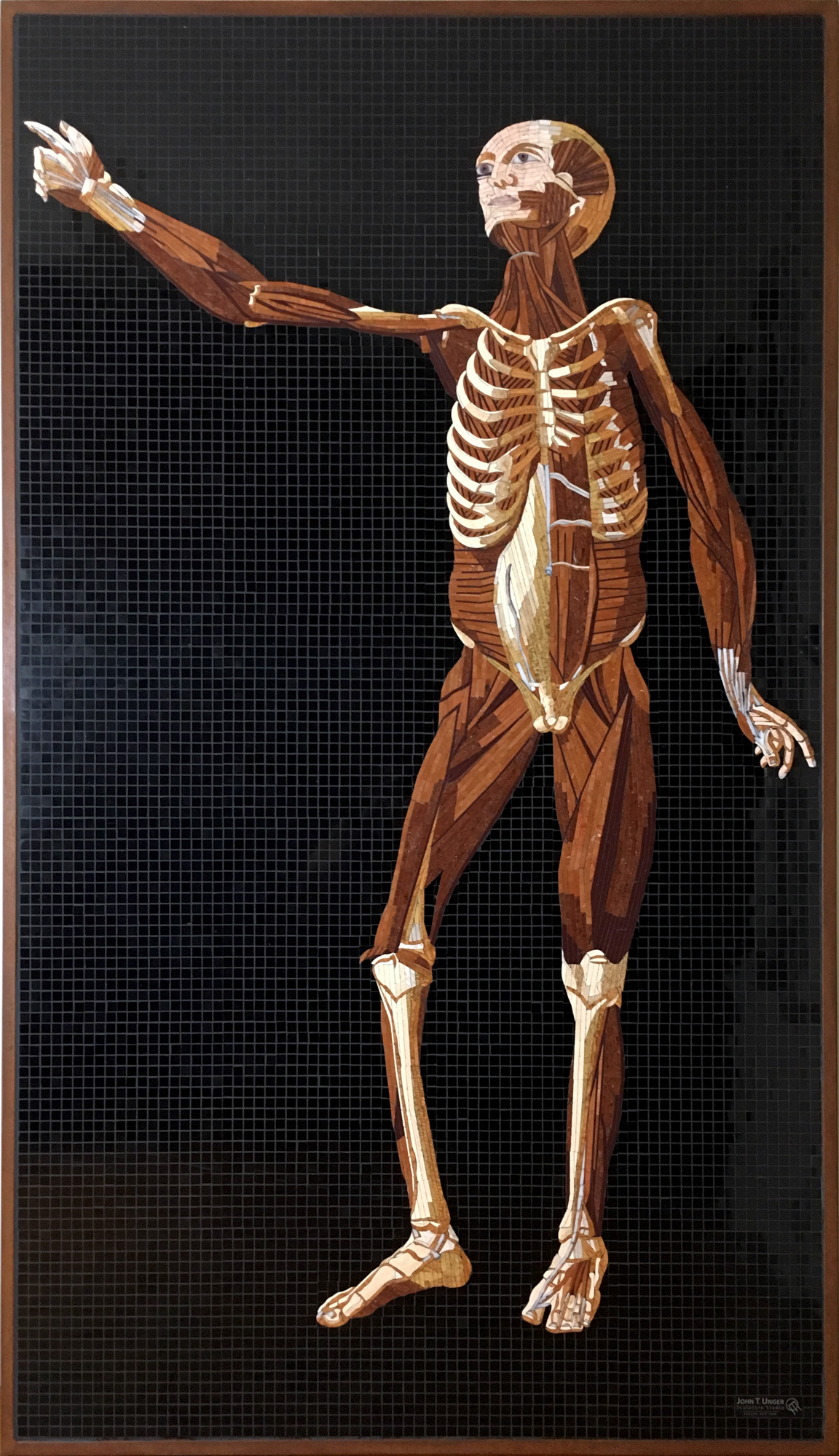
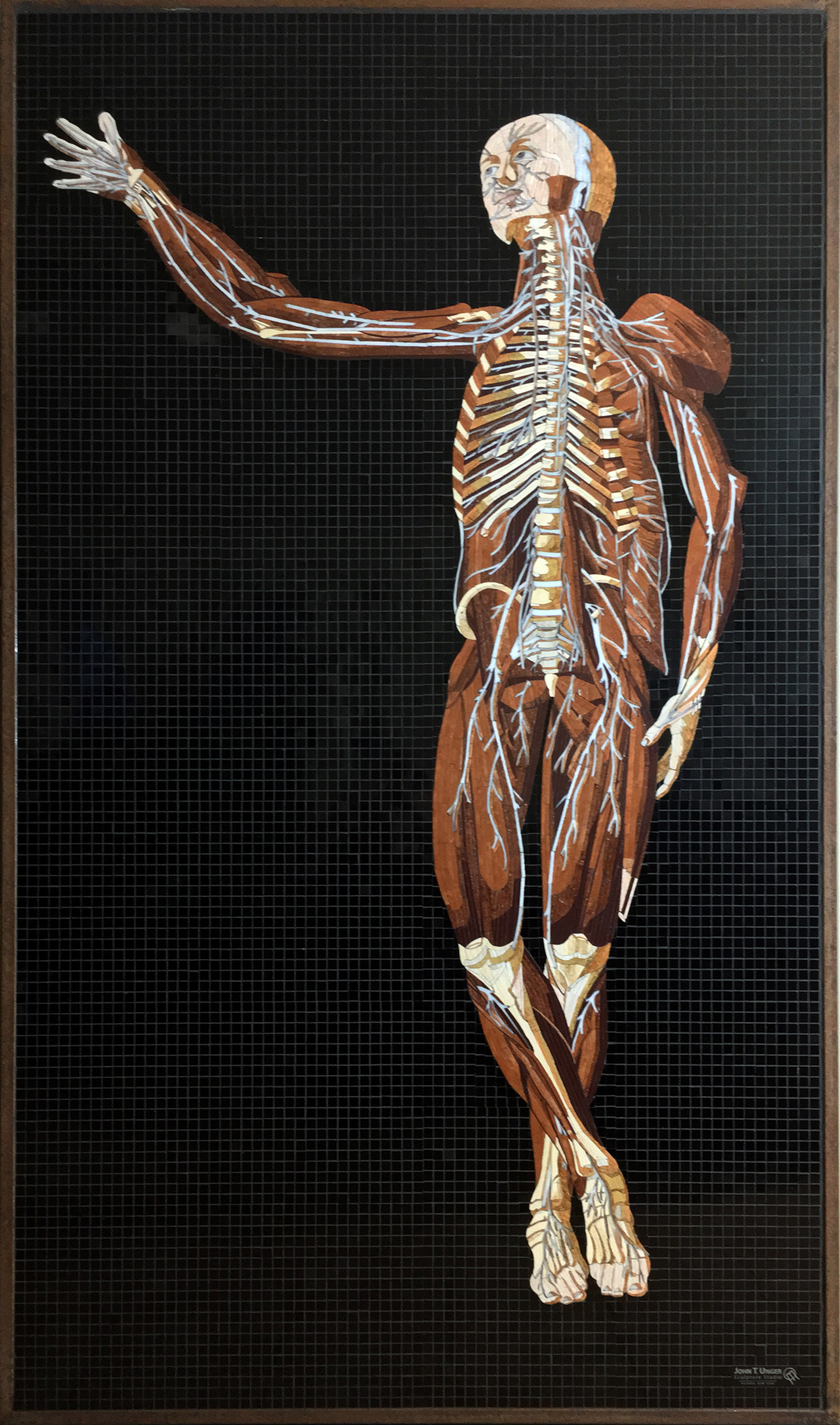
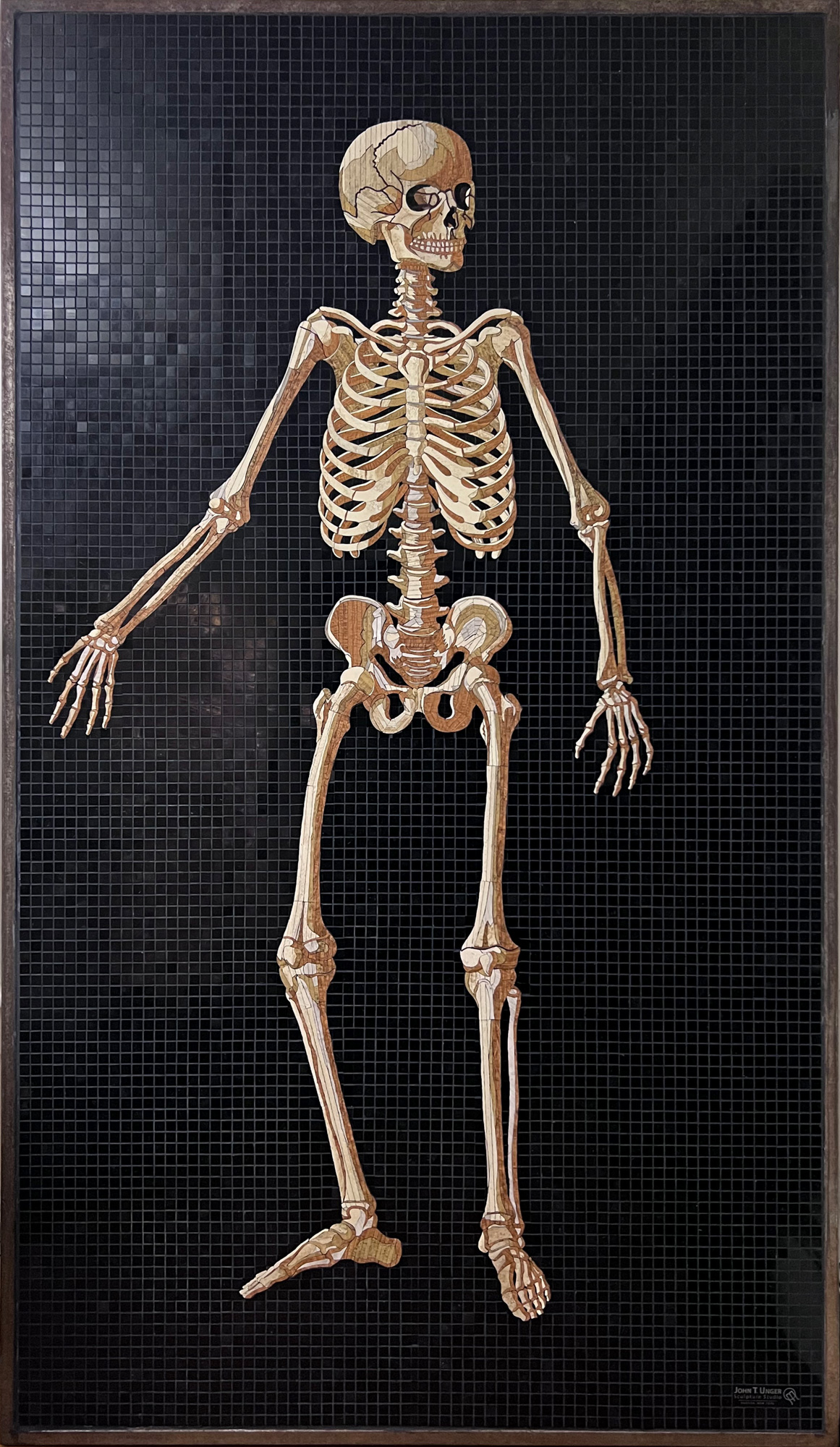
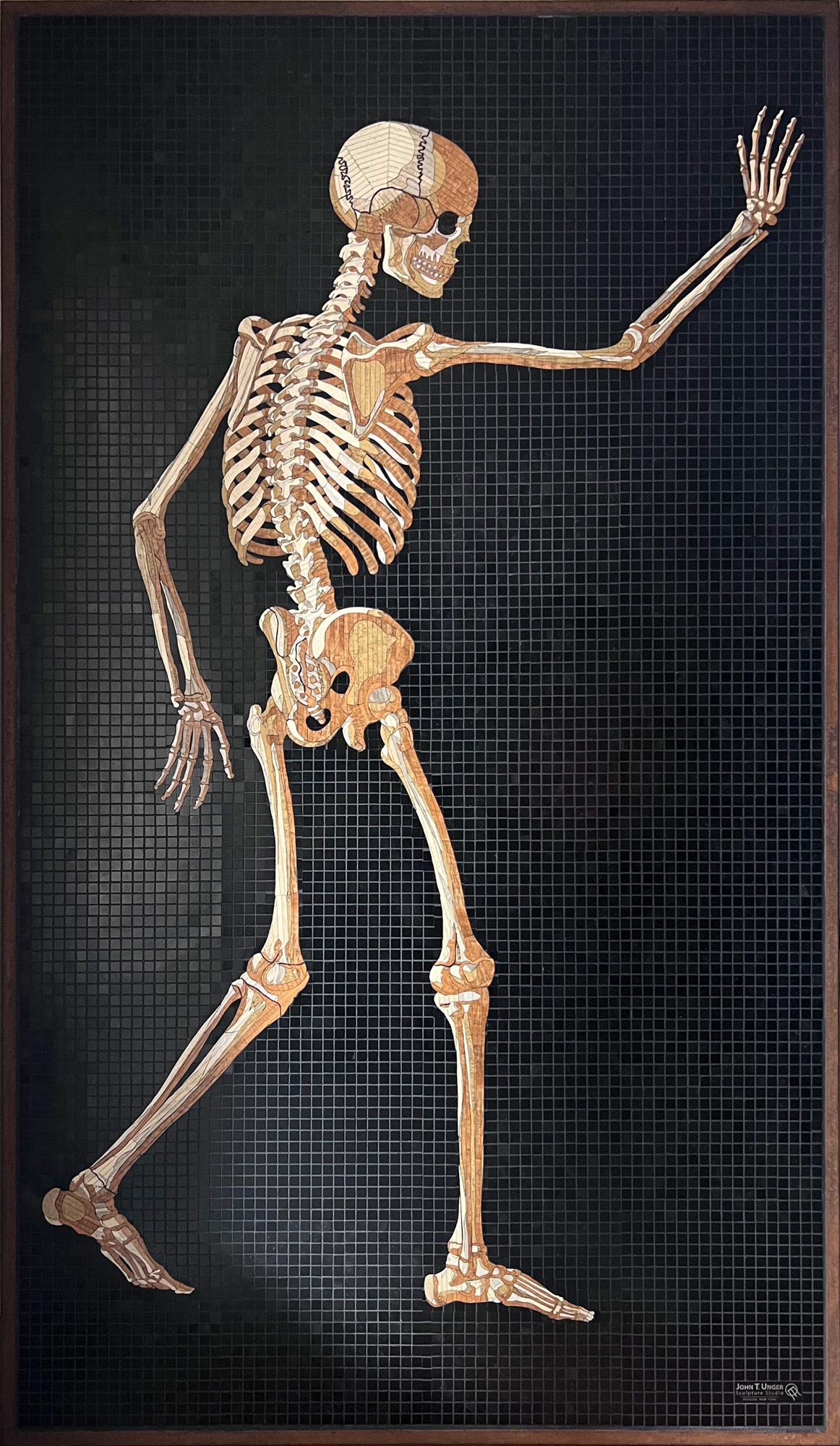
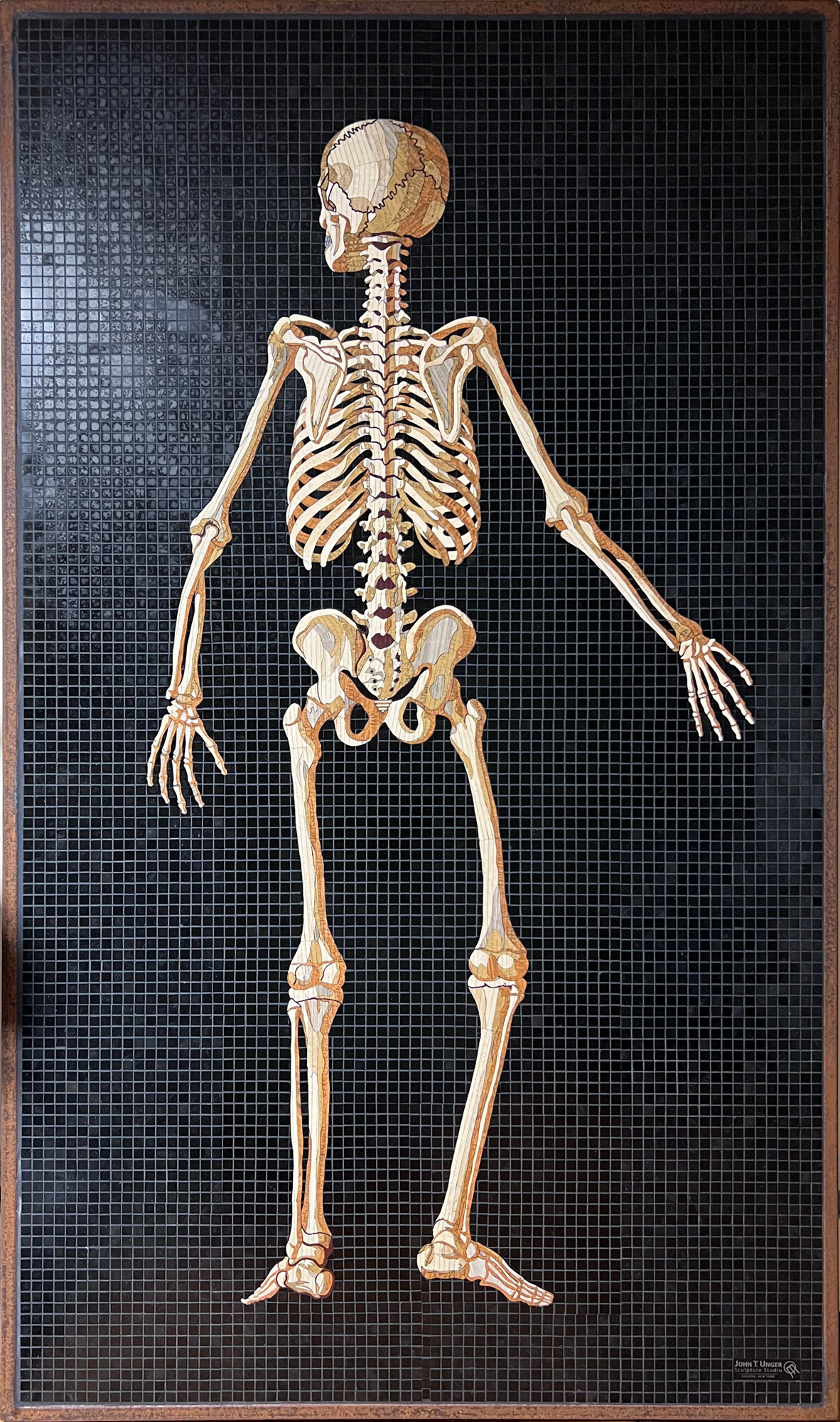
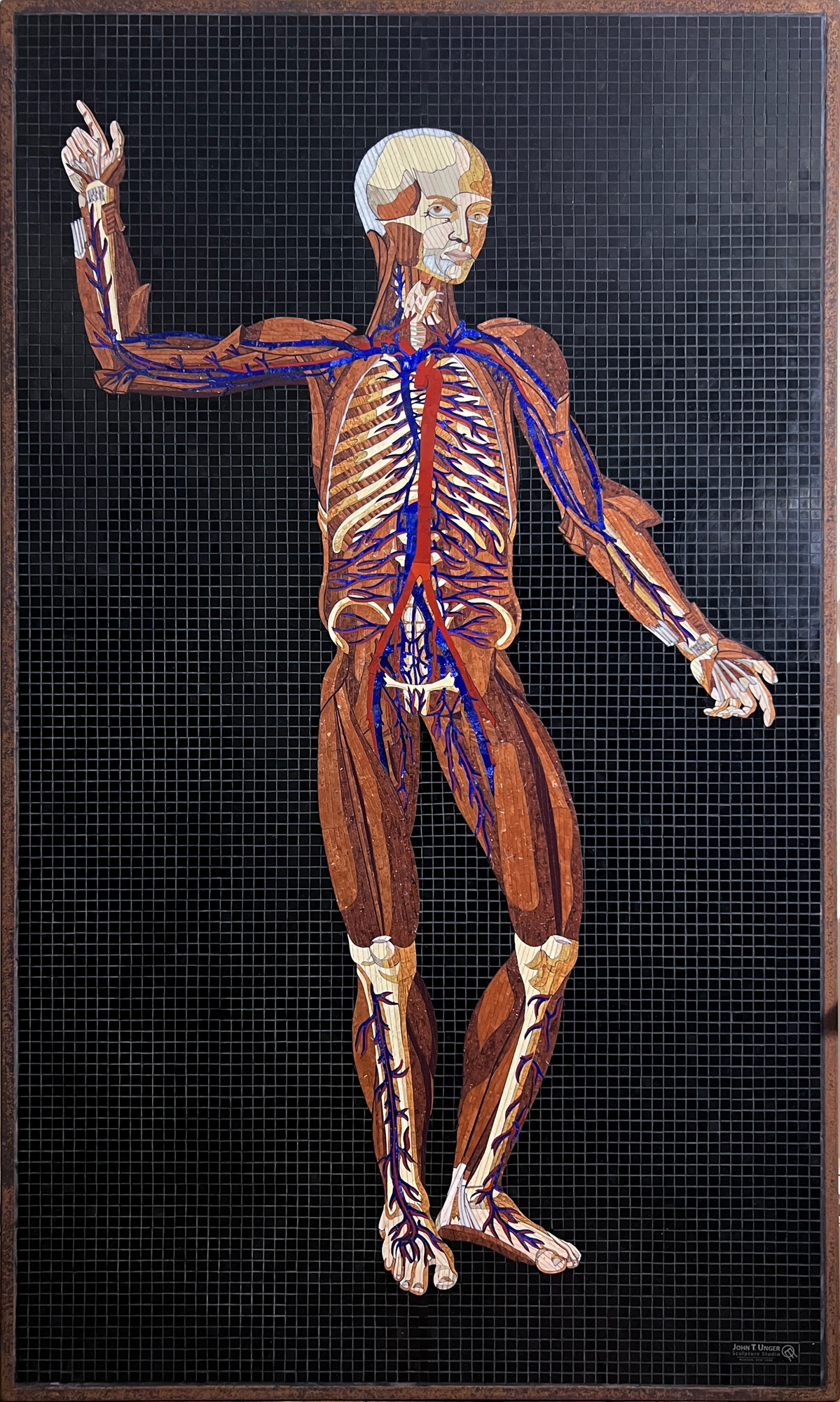
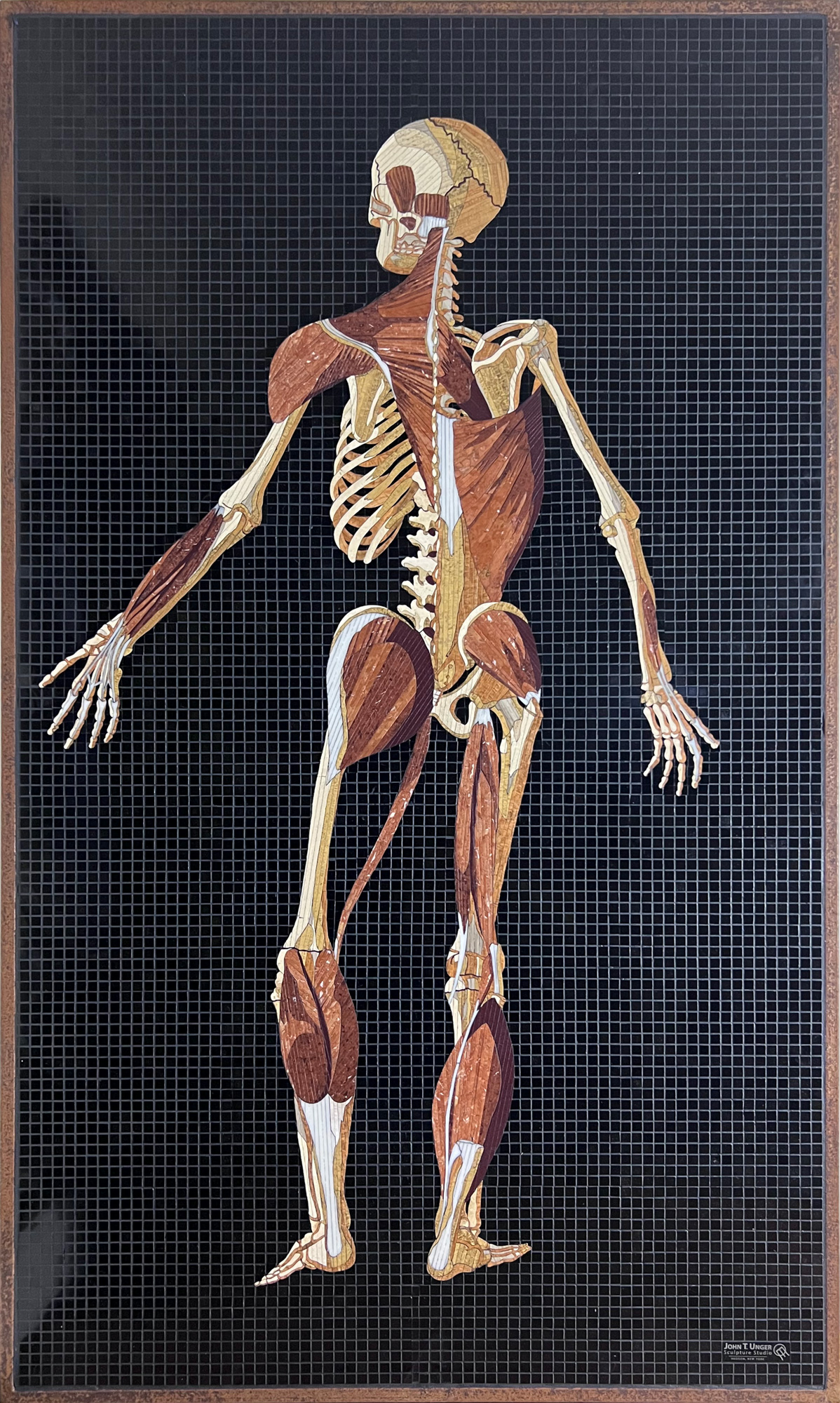
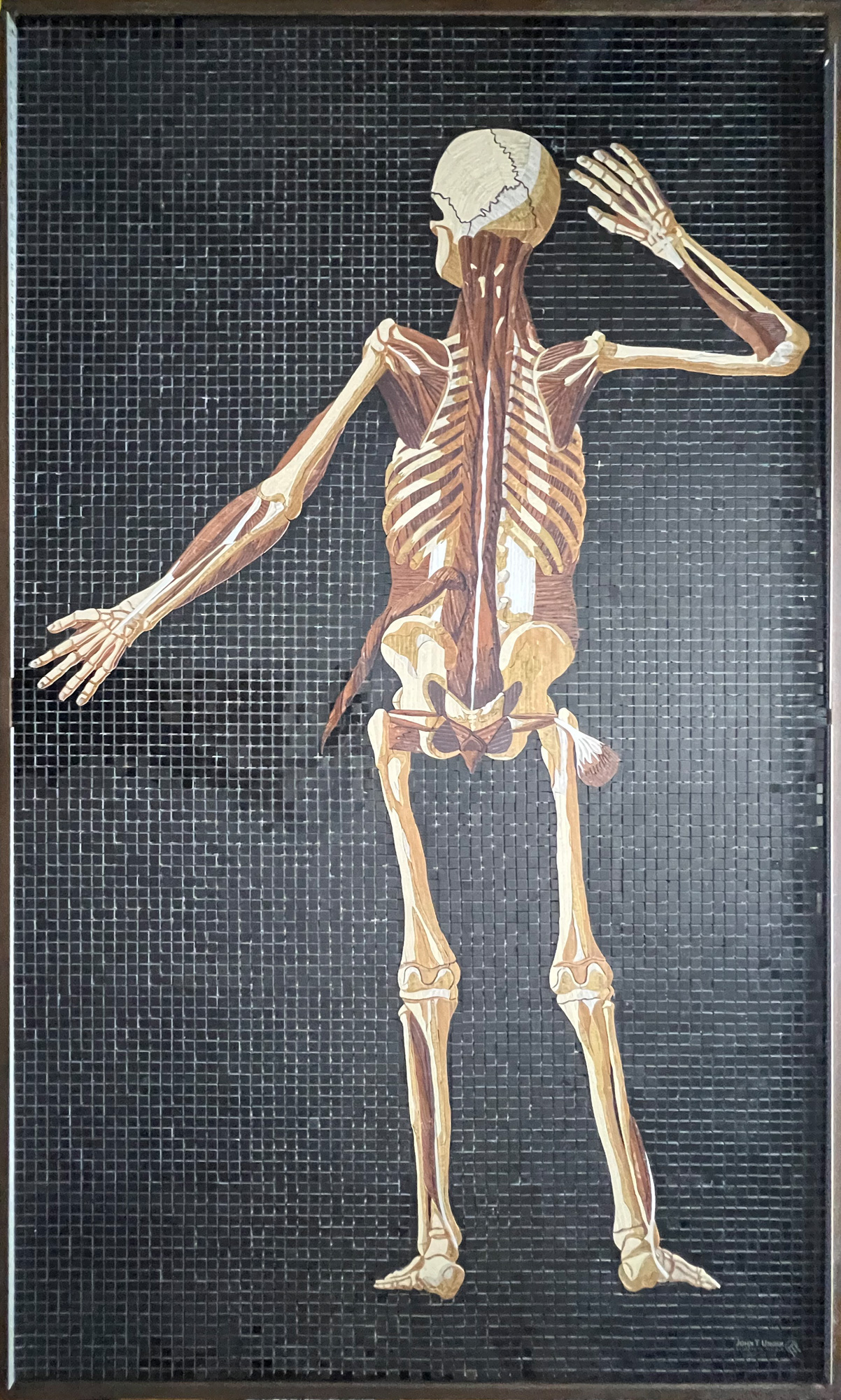
The structure within us all comes to life in these mosaics. Anatomy Set in Stone translates Bartolomeo Eustachi’s sixteenth-century engravings into marble, travertine, onyx, and precious gems: veins and arteries in lapis lazuli and red jasper, eyes beveled in star ruby, sapphire, and tiger eye. Twenty-two figures, each at life size, executed with a painterly precision rarely seen since the Renaissance. The founding work of the Museum of Mosaic Environments.
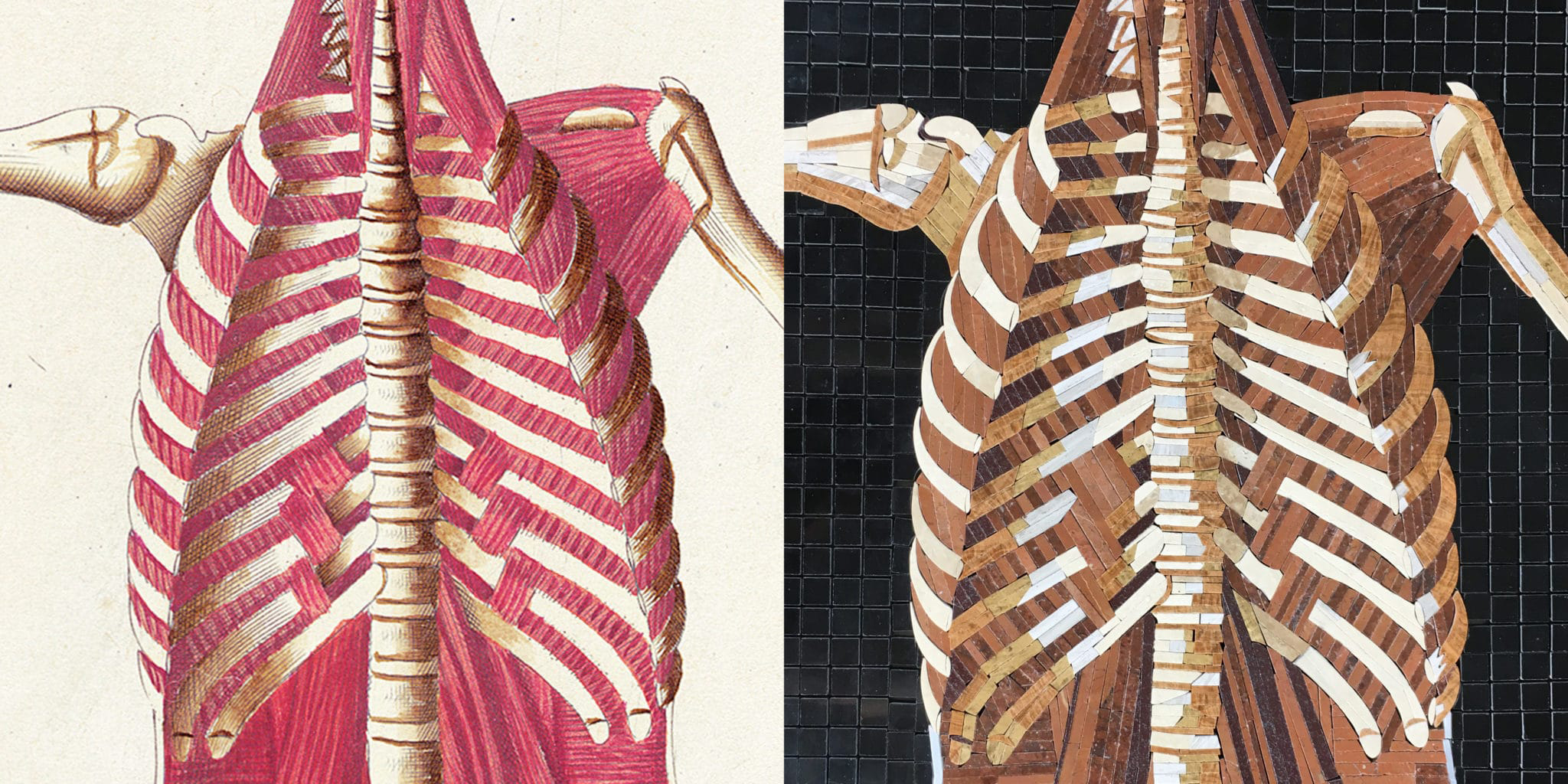
Bartolomeo Eustachi, Table 38, 1552 (engraving) · Rachael Que Vargas, Table 38, after Eustachi, 2019 (marble, travertine, onyx, limestone, quartz)
The source
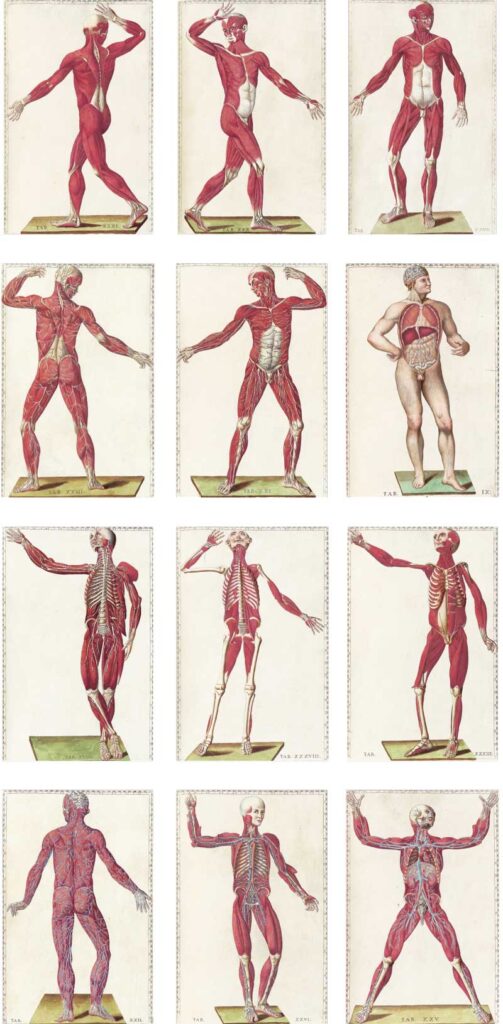
Bartolomeo Eustachi completed his anatomical illustrations in 1552 — nine years after Vesalius published his Fabrica, and so accurate that had they been published in his lifetime, a modern understanding of human anatomy might have arrived two centuries earlier than it did. Eustachi was the first comparative anatomist, drawing on the animal realm for comparison and clarity in a way no anatomist before him had done. He and Vesalius share the credit for creating the science of human anatomy.
They were not published. All but eight plates were lost for 162 years following his death, rediscovered in the early eighteenth century and purchased by Pope Clement XI, who gave them to his physician Giovanni Maria Lancisi. Lancisi published them in 1714 as Tabulae anatomicae Bartholomaei Eustachi quas a tenebris tandem vindicatas — Anatomical Illustrations of Bartholomeo Eustachi, Rescued from Obscurity.
The United States National Library of Medicine provided high-resolution scans of their 1873 edition so that the engravings could be printed large enough to serve as guides for the mosaics. Of the forty-seven plates Eustachi produced with the help of engraver Pier Matteo Pini, twenty-two were selected for translation into stone.
When we speak of truth or scientific reason, we often use the phrase set in stone. These drawings have been accurate for 465 years. That seemed like sufficient reason to make it literal.
Making
The genesis of this project is so simple it almost feels ludicrous. Minerals and stone dug from the body of the Earth come in exactly the right colors to portray the interior of the human body.
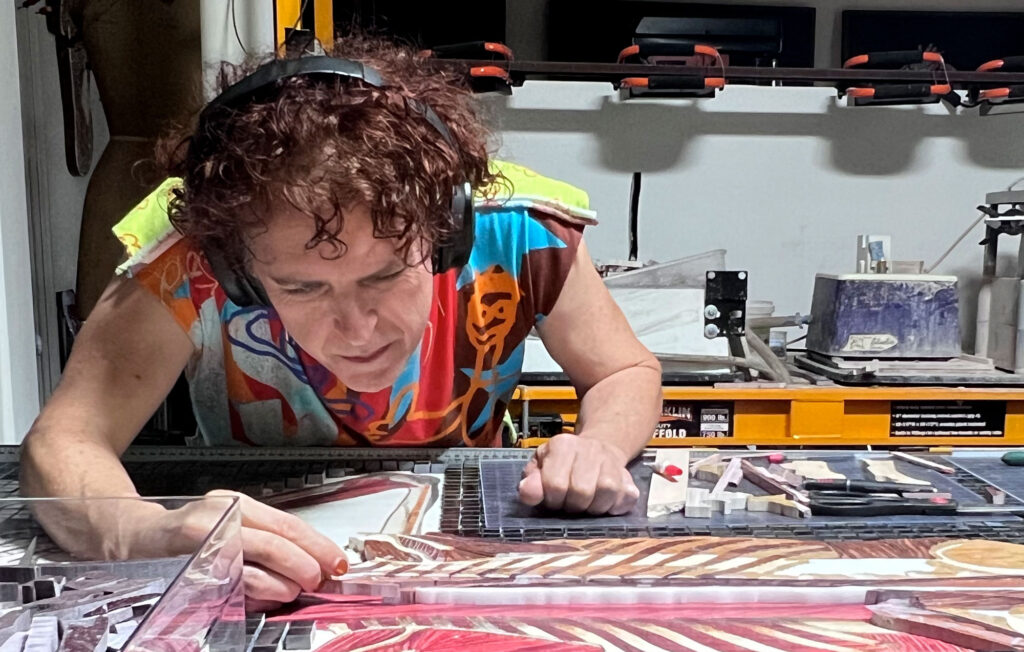
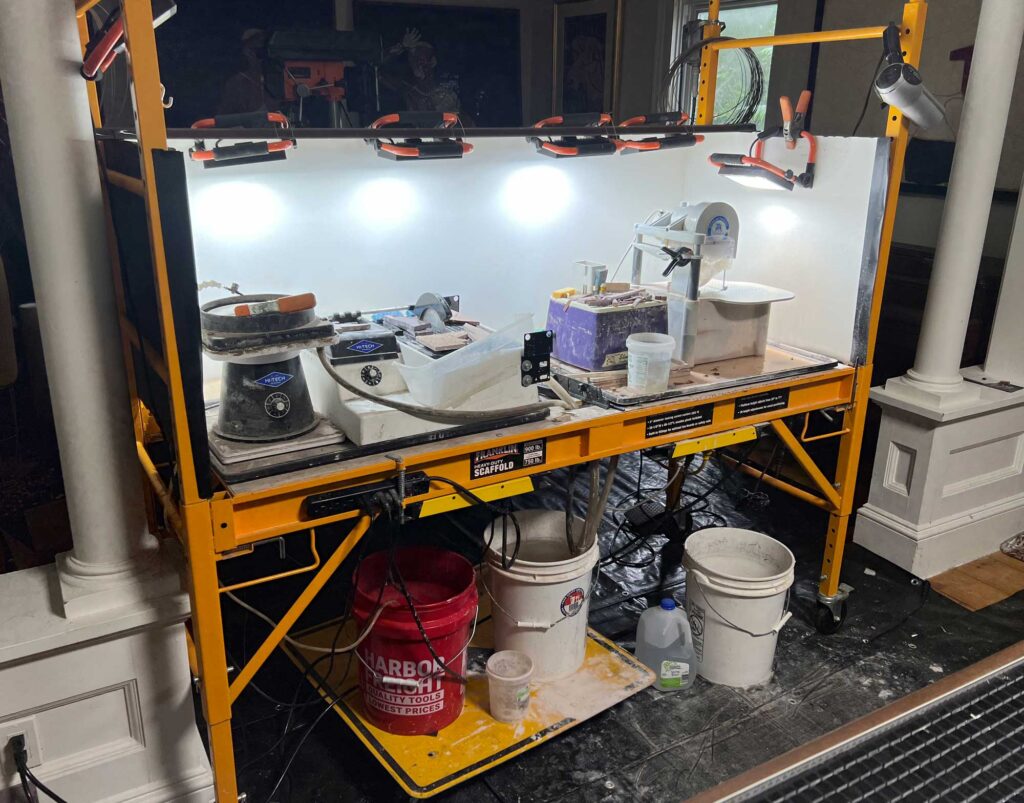
Each mosaic begins with 12-inch stone floor tiles cut on a wet saw into strips as thin as 1 millimeter. The experts said it couldn’t be done — both the stone supplier and the saw manufacturer said cutting to that tolerance was impossible. It is not impossible. I’ll admit, there are tricks to it: customizing the saw’s cutting tray with a 2″ thick lexan backstop to minimize vibration during cutting, creating template strips to establish consistent widths on the long cuts, and a decade of developing technique and refining it through constant thought and experimentation. But the most important trick is being unwilling to believe that anything is impossible.
The crosshatching in Eustachi’s shading is achieved by cutting striated limestone at four angles — with the grain, across the grain, and both 45-degree diagonals to produce a chevron effect. The circulatory system is cut from lapis lazuli and red jasper. The eyes are beveled star ruby, sapphire, black garnet, and tiger eye, set to protrude slightly from the surface.
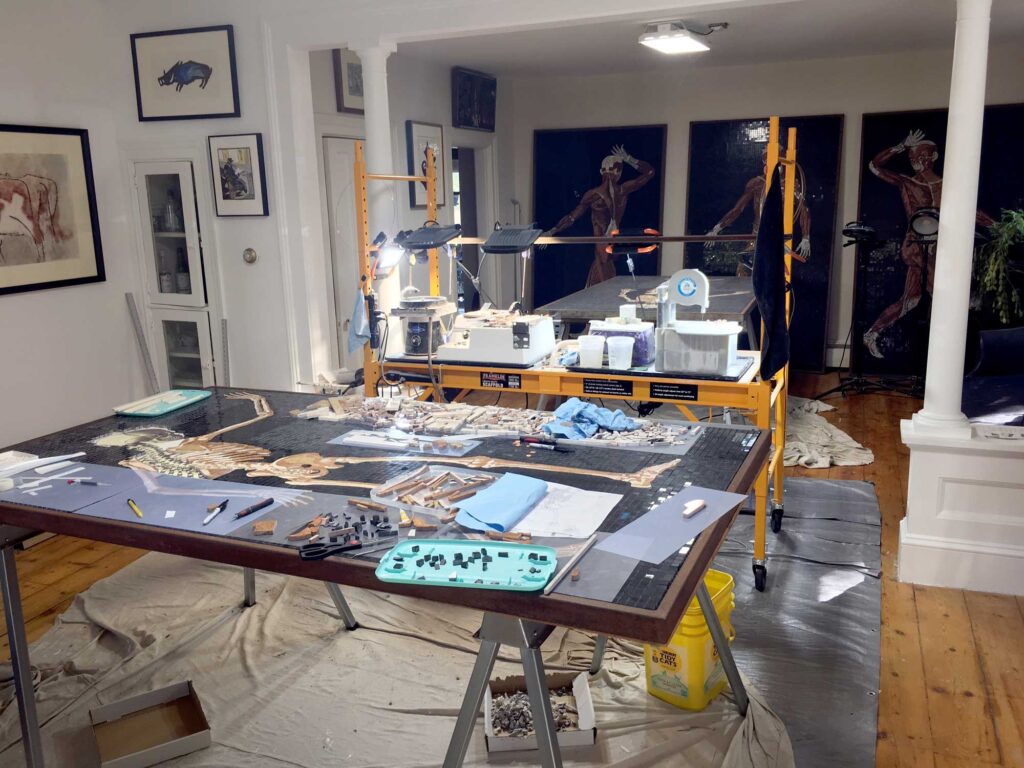
Each figure takes approximately 600 hours to complete. Across the series: roughly five miles of cut stone, 616 square feet of finished mosaic surface, and more than a hundred thousand dollars in materials. Every cut is made by hand. Every placement is a decision.
The choice of stone is not incidental — it is the argument. Matching material to meaning is a core principle of this practice. The commission for La Siren III at the American Museum of Natural History used bottle caps for the mermaid’s tail, suggesting both fish scales and the sequins of Haitian ceremonial flags. Here, the body of the Earth renders the body of the human. The correspondence is exact.
Recognition
I enjoy imagining the mosaics as fossils with extremely well preserved soft tissue.
Smithsonian: — Smithsonian Magazine, October 2018
The trapezius, the latissimus dorsi, the hamstrings — those were easy… The short muscles around the rib cage, though — those are hard. The nervous system, branching like lacy coral, is harder still.
Anatomy Set in Stone made its public debut at Carrie Haddad Gallery in Hudson, New York, June 12 through July 28, 2019, where two completed mosaics were shown as part of the exhibition Mortals, Saints & Myths.
The complete cycle of twenty-two figures will enter the permanent collection of the Museum of Mosaic Environments, where they will be presented at full scale alongside the source engravings — each mosaic paired with the plate it translates. The final eight figures will be completed in the Visible Studio at the MME flagship, as live programming.
The book
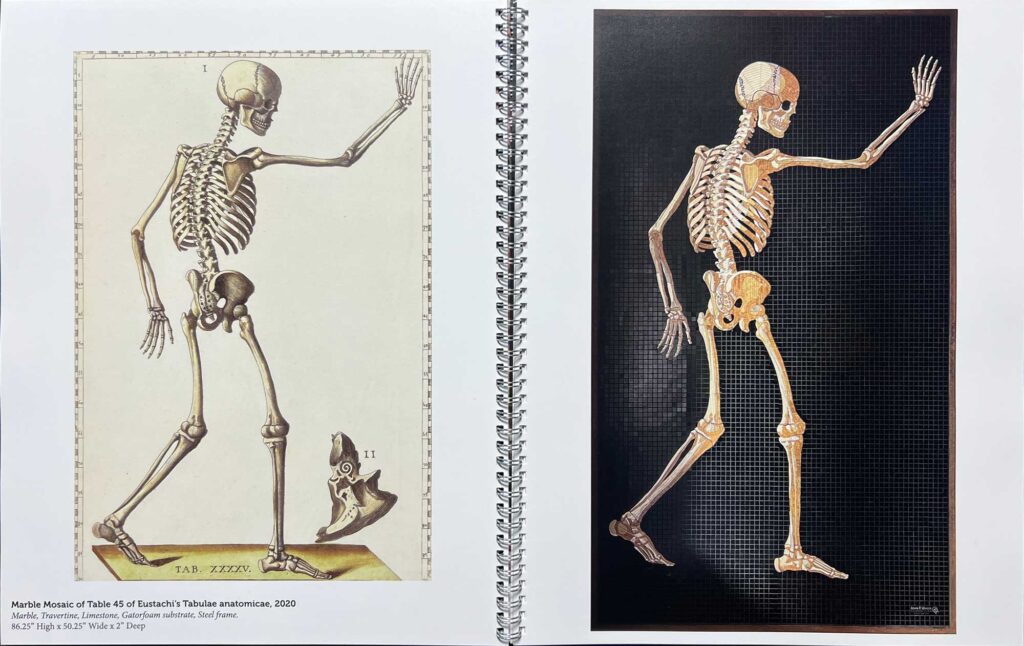
Anatomy Set in Stone is an 11 by 14 inch, 58-page full-color book documenting the completed mosaics alongside the original Eustachi engravings at comparable scale — the format the screen cannot replicate. The wire binding lets the pages lie completely flat, inviting direct comparison between stone and copper plate, mosaic and engraving, 2017 and 1552.
Each mosaic is reproduced at 13.5 inches tall, a level of detail far beyond what any screen can render. For anyone who has followed the project, it is the first opportunity to see the full series together in one place at a scale that does justice to the work.